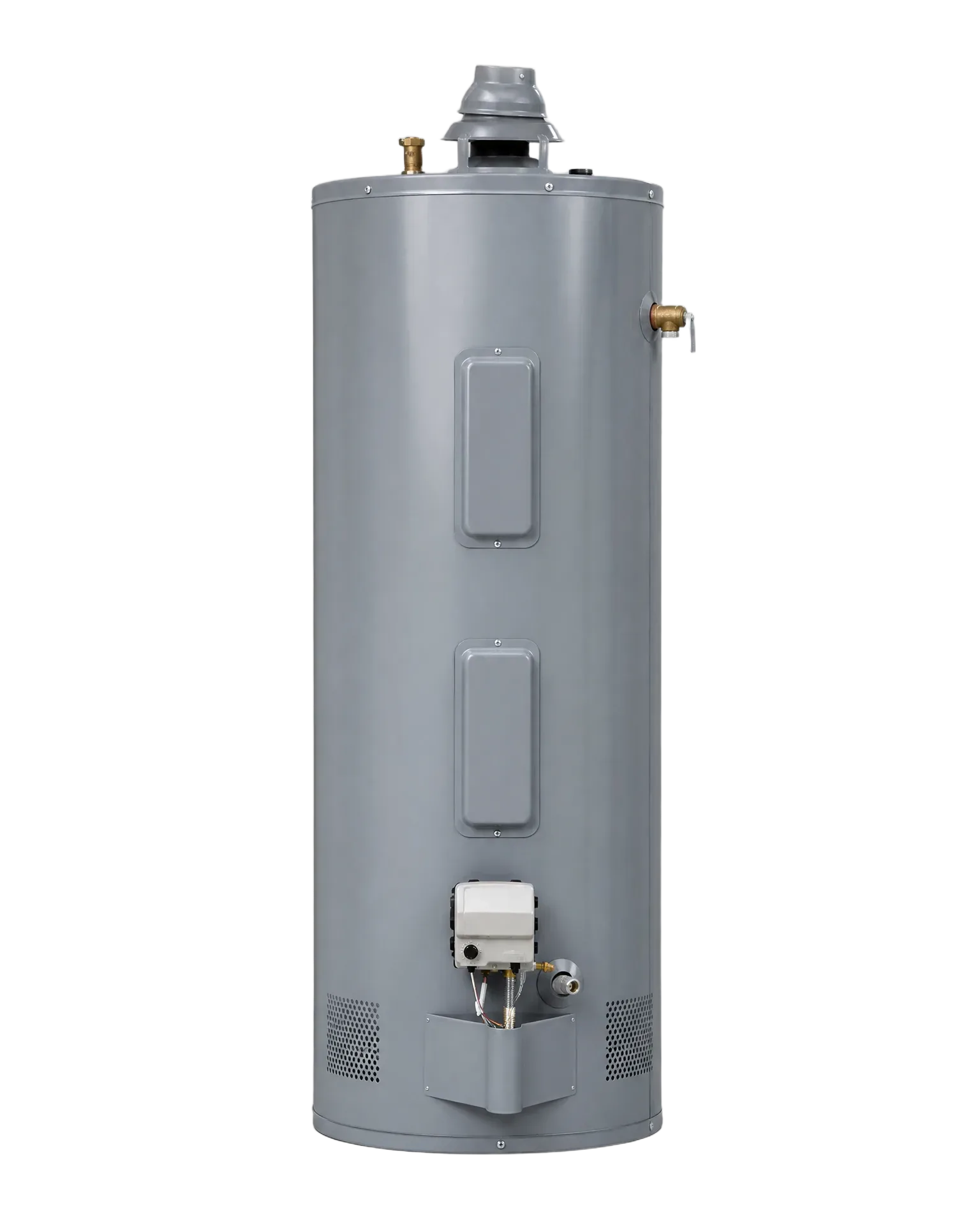
Most homes in Idaho heat with gas, and that's the better choice for your water heater too if you already have a gas line run to it. A gas water heater recovers faster, so a full tank serves a house better when several showers or loads of laundry happen back to back. Electric is worth considering if your home doesn't have gas service already, since running a new gas line adds real cost to the installation. Power here is cheap compared to a lot of the country, which narrows the gap in what an electric tank costs to run. If your current water heater is gas, replacing it with gas keeps the install simple since the venting and gas line are already there. Switching fuel types on a replacement is a bigger job, and it's worth knowing that going in before you start comparing units.



What this means for your tank
If your water heater is gas and sits on a line that already feeds it, replacing it with another gas unit is usually the straightforward path. If you're starting from electric and have no gas line nearby, running one to the water heater adds cost and work most homeowners don't expect, and that changes the math on which unit makes sense for your house.
Either way, finding the right contractor for your situation takes time you'd rather not spend: calling around, explaining your setup more than once, trying to compare quotes that aren't quite comparing the same thing. Once you answer a few questions about your home, you get matched with a contractor suited to the job, and they'll reach out to you directly.

A contractor checks whether a gas line already reaches the water heater.
The old tank is disconnected and drained before removal.
The new tank is set and connected to the gas line and vent.
The gas supply is tested and the pilot or igniter is checked.


51.6% of homes statewide heat with gas
More than half the homes in Idaho run on gas, so if your house is one of them, a gas water heater is likely already set up to go back in without new line work. That's one less thing to plan for before next winter.
ACS 2020-2024 5-year B25040
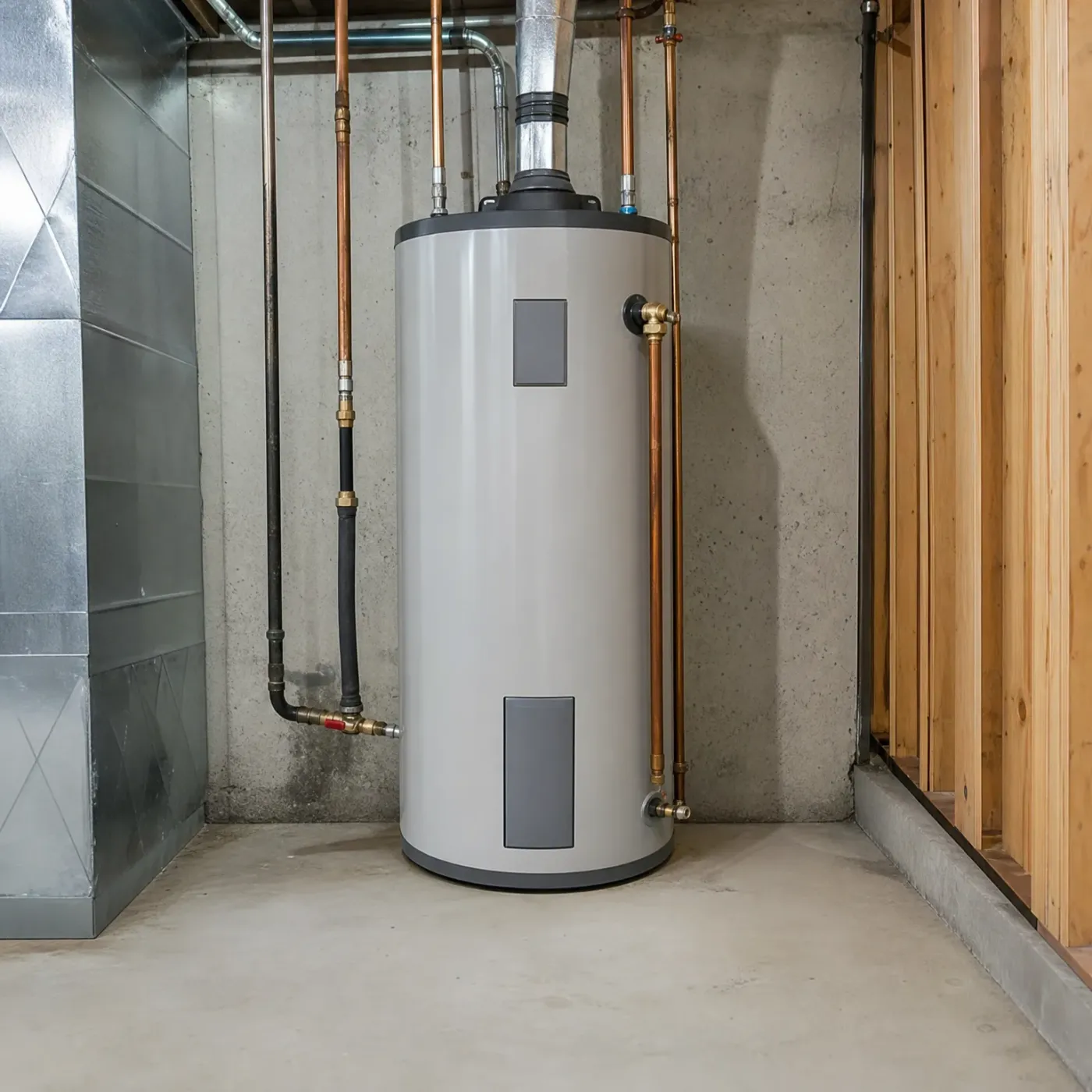
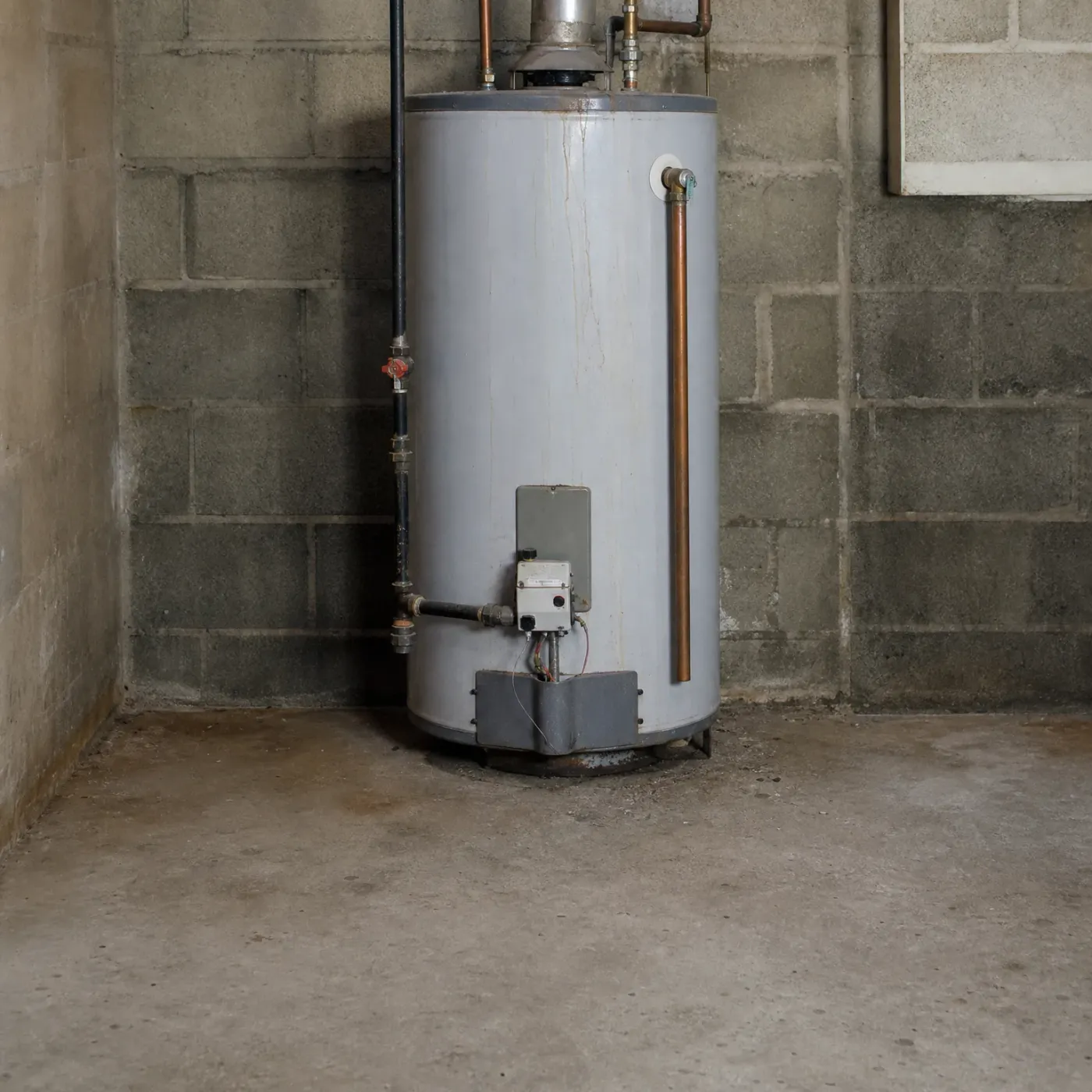
How long does a gas water heater actually last in Idaho?
You're planning a season ahead, not waiting for the old tank to fail on you. Before you commit to a gas water heater for the replacement, it helps to know what kind of life you're actually buying. A number from a manufacturer's brochure doesn't tell you much if it doesn't account for your water or how the tank gets used.
Most gas tanks run 8 to 12 years before they need replacing
A gas water heater's tank wears from the inside, where the water sits against steel day after day. The anode rod inside is what slows that corrosion, and once it's used up, the tank starts rusting from within. Hard water speeds this along, and parts of Idaho run hard enough that sediment builds up at the bottom of the tank faster than it would with soft water. That sediment sits between the burner and the water above it, so the burner works harder to heat the same gallon. A tank that gets flushed once a year tends to hold onto its full range. One that never gets flushed often fails on the early side of that window.




A local pro for your water heater installation
Deciding between gas and electric is only the first question. Once you know which way you're going, you still have to find someone who will check the gas line, pull the right permit, and size the new tank to your house, not just drop in whatever matches the old one. That means calls to contractors who may or may not work on water heaters regularly, explaining your setup more than once, and sitting with quotes that are hard to compare because no two list the same things. In Idaho, where gas is the common choice and the work usually means dealing with an existing line and vent, getting that part wrong costs you time before winter arrives. Handing this off now means one contractor who knows gas water heater installs in your area reaches out to you directly, already knowing what you're dealing with, instead of you running down that list yourself.
Gas or Electric, Decided Ahead
- Gas still fits most Idaho homes better, especially if a gas line already runs to the water heater.
- If you're on electric with no gas line nearby, that's extra work to plan for, not a reason to rule it out.
- A licensed contractor can confirm in one visit whether your gas line, venting and tank size are ready for the swap.
- Skipping the gas question now means risking a mismatched or delayed install when the old tank actually fails.
- Matching with a contractor means you're not the one calling around, explaining your setup twice, and sorting through quotes.
- Deciding ahead of time, a season before you need it, is what puts you in control of the install instead of the weather.
Gas is the right call for most Idaho homes, and if your water heater already sits on a gas line, that answer is simple. Electric with no gas line nearby takes more work to get there, but it's still worth weighing rather than ruling out before anyone looks at your setup. The only way to know for sure is to have a licensed contractor check the gas line, the venting and the tank size against your house, not a guess made from the driveway.
Waiting until the old tank fails doesn't save you this decision, it just makes it for you, usually at the worst time to sort out a mismatched size or a line that was never run. Deciding now, a season ahead, means the install happens on your schedule instead of a cold morning with no hot water.
The part of this that actually wears on people is everything before the work starts: finding a contractor who does this, calling a few more to compare, explaining the same setup each time, then sorting through quotes that don't quite match up. Getting matched with a contractor who already knows what you need skips that. You explain your situation once, and the right person follows up with you.
Gas or electric is the first question. Whether your house is ready for it, and who's going to do the work, is the one that actually gets answered next.

Water Heater Installation
Get the right pro for your water heater

- A local pro who knows water heaters gets your details and gets in touch.
- Get in touch with a local installer about a new water heater.

- Once you send the form, finding a pro is off your list.
- After you send the request, you're done searching.

- Skip collecting and comparing quotes for the new water heater.
- Fill out one short form instead of calling around.

- Your request goes to one pro, not a list of companies.
- One installer gets your project, so there's no bidding war over it.