Get Hot Water Idaho
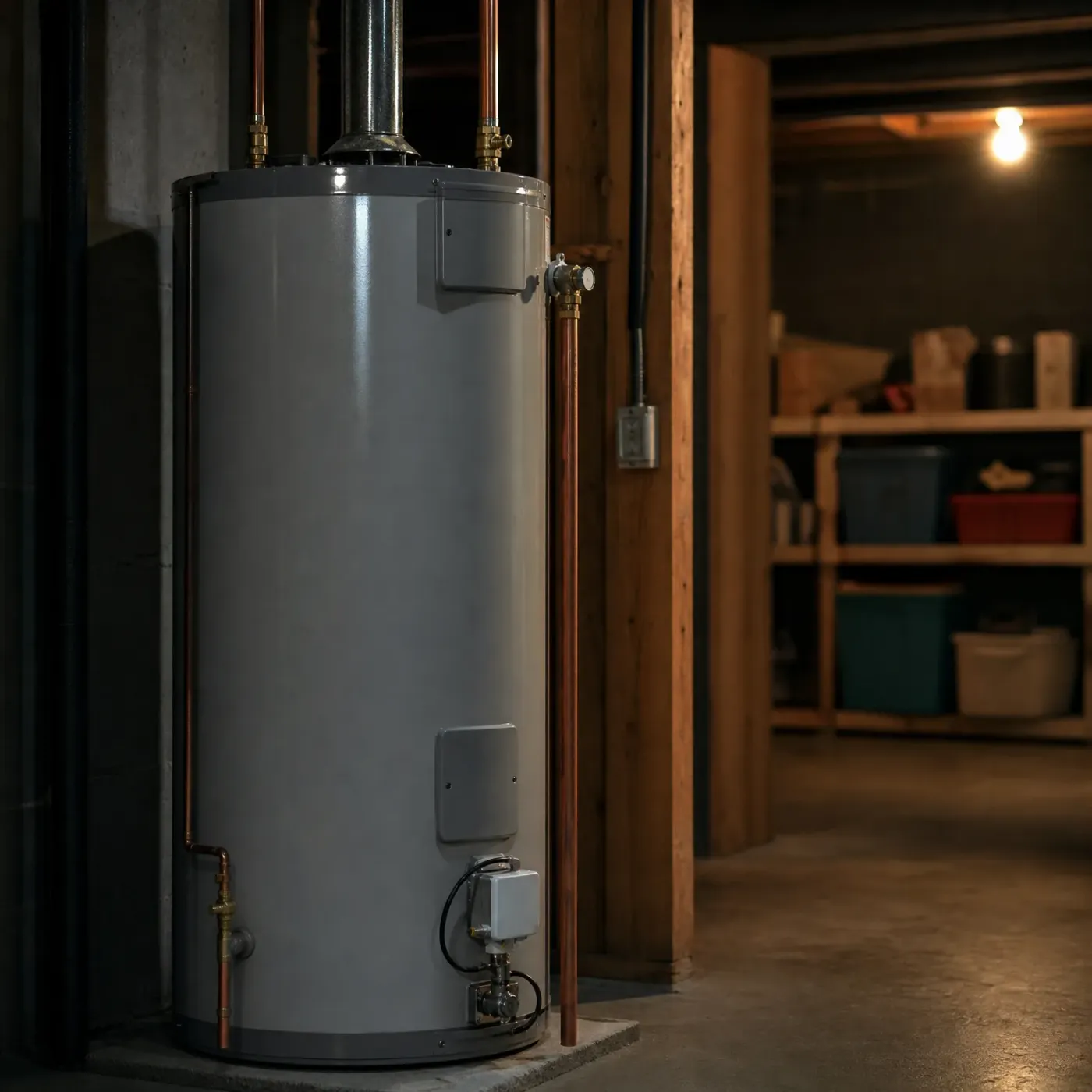
A large gray cylindrical water heater with copper pipes and a metal flue stands on a concrete pad in a dim basement, with wood framing and shelves of storage bins lit by a bare bulb behind it.

A pro who works on water heaters

How long a water heater lasts in Idaho

Most water heaters last eight to twelve years, but Idaho's hard well water in a lot of areas can shorten that by wearing down the tank faster. Your water heater's age, what's feeding it, and whether it's gas or electric all change the math. This page walks through what to check and when replacement makes more sense than another repair. Answer a few questions below and a contractor who installs them locally will reach out.

Match me with a pro

A water heater in Idaho typically runs 8 to 12 years, with gas units often landing on the shorter end of that range because the tank takes more wear from constant reheating and mineral buildup on the burner and flue. Most Idaho homes run on gas, so that's the number worth watching. Hard water in many parts of the state speeds up the sediment that collects at the bottom of the tank, which makes the burner work harder to heat the same amount of water and shortens the unit's life. A water heater nearing ten years old and working harder than it used to, taking longer to deliver hot water or running out faster, is closer to the end than the beginning. Knowing roughly where your unit sits in that range tells you whether to watch it or start planning for what comes next.

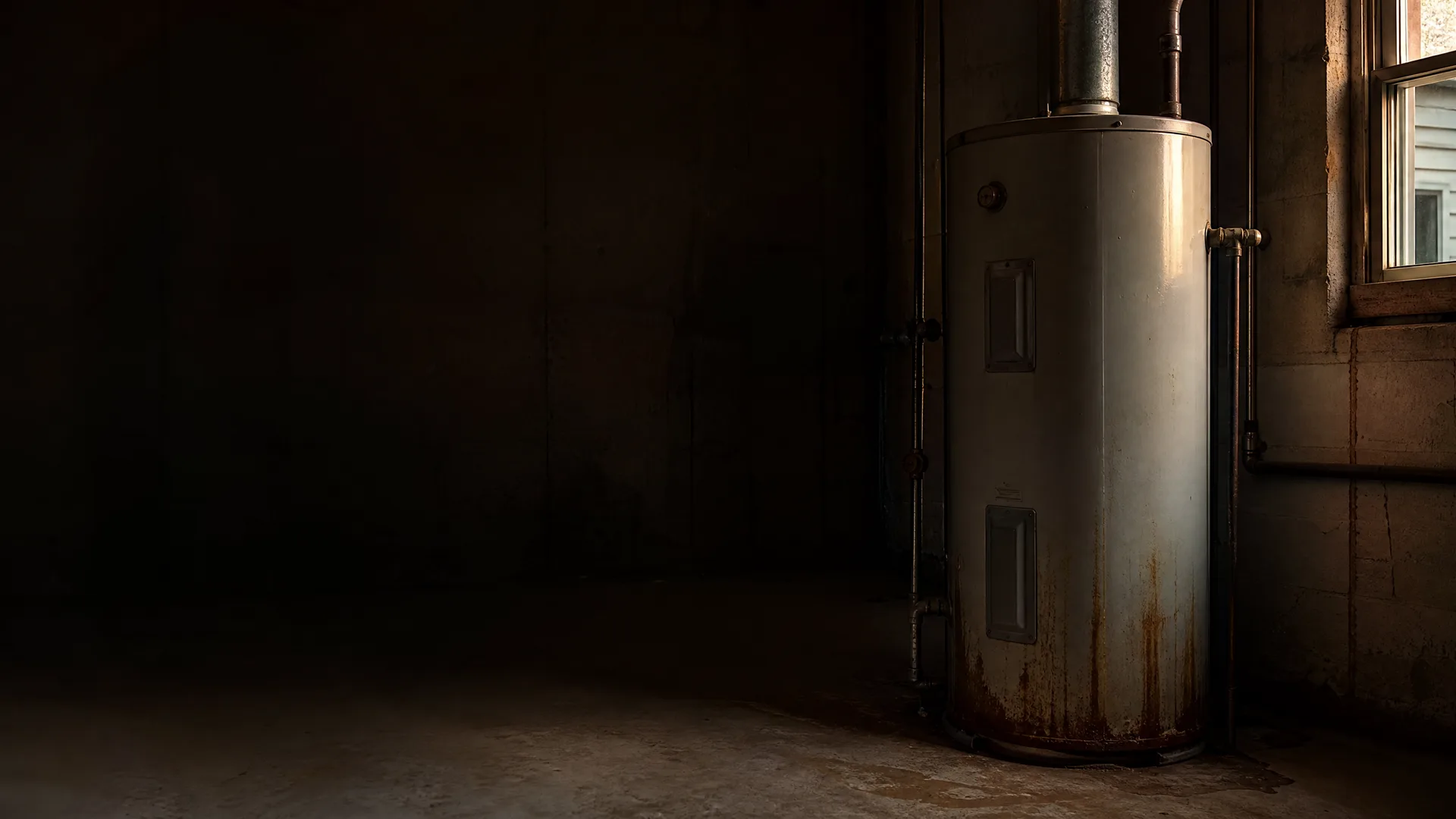
A rusting cylindrical water heater with connected pipes stands against a dim concrete basement wall near a window.

You're down in the utility room after dinner, grabbing the laundry, when you notice it. The light's low, just the one bare bulb overhead, and there along the base of the tank is a line of rust, orange-brown, following the seam where the metal meets the floor. You crouch down and touch it. Damp. Not dripping, just damp, like it's been working its way out for a while. The tank's old enough that you don't remember the last time anyone served it. Outside, the evening's still warm, the kind of dry heat Idaho holds onto into September. You stand there a second longer, deciding whether this is a tonight problem or a this-week problem.
Gas or Electric: Which Lasts Longer

Gas tank

  • Runs on the shorter end of 8 to 12 years because the burner and flue pick up mineral buildup from the constant reheating cycle.
  • Keeps working during a power outage since the burner lights off gas, not electricity, which matters if storms knock out power.
  • Costs less to run month to month since gas rates in Idaho stay low compared to electric.
  • Needs a flue and gas line, so swapping to electric later means new venting work, not just a new tank.
  • Flushing the tank once a year cuts down on the sediment that wears the burner and shortens the tank's life.

Electric tank

  • Tends to land on the longer end of 8 to 12 years since there's no open flame heating the tank from below.
  • Stops working the moment the power goes out, with no backup until the lights come back on.
  • Costs more to run month to month even with Idaho's cheap electricity, since electric elements use more energy than a gas burner to heat the same water.
  • Skips the flue and gas line entirely, so installation is simpler in a home that doesn't already have gas run to it.
  • Still builds up sediment from hard well water, so the lower heating element needs the same yearly flush as a gas unit.
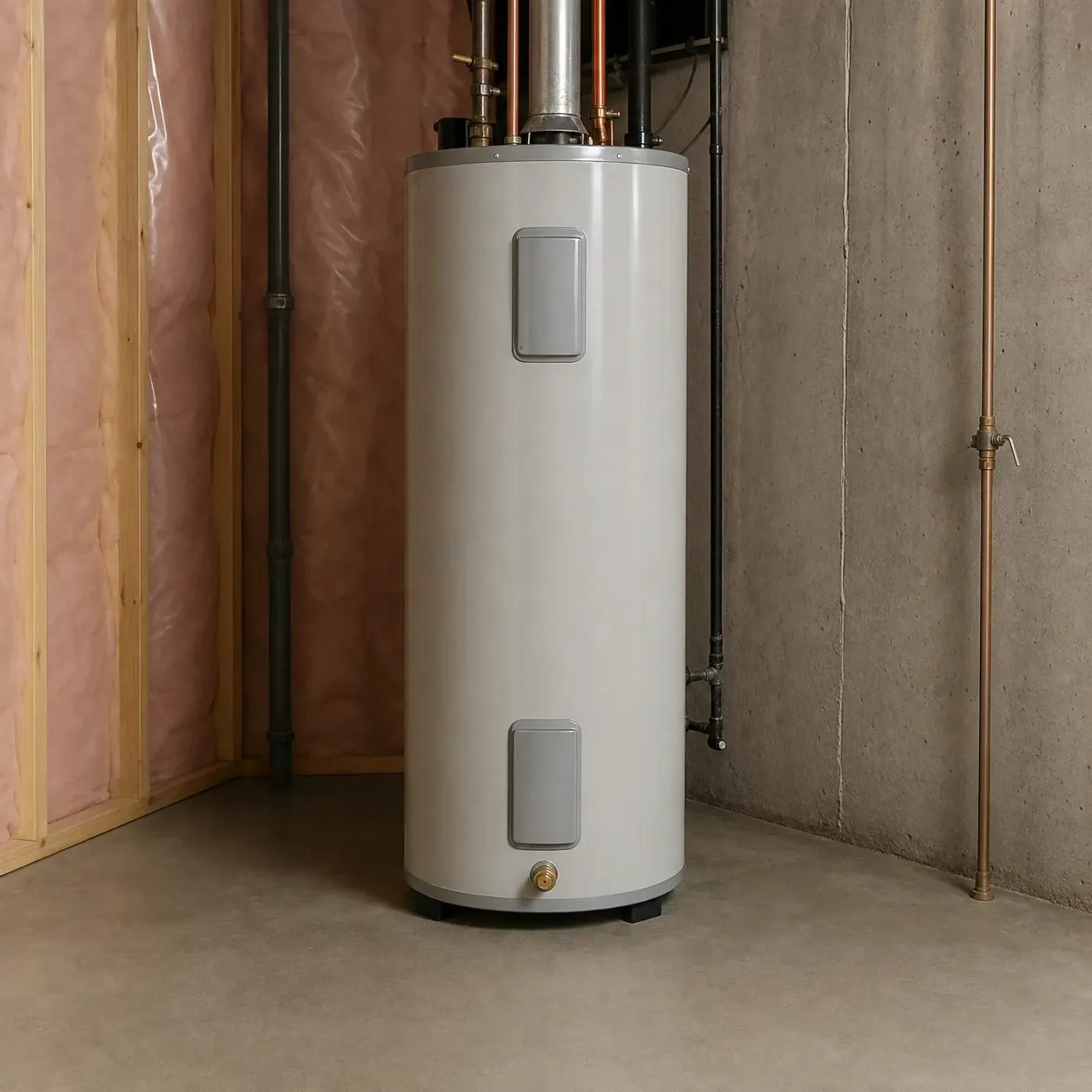
A white cylindrical water heater with two access panels and a brass drain valve stands on a concrete floor in a basement corner, beside a pink-insulated stud wall and a concrete wall with copper and black pipes.

Working as it should

This is a tank doing its job. No rust on the fittings, no damp spots on the floor around the base, copper and black iron running clean to the ceiling. If yours looks like this, there's nothing to do but check it again in a few months.

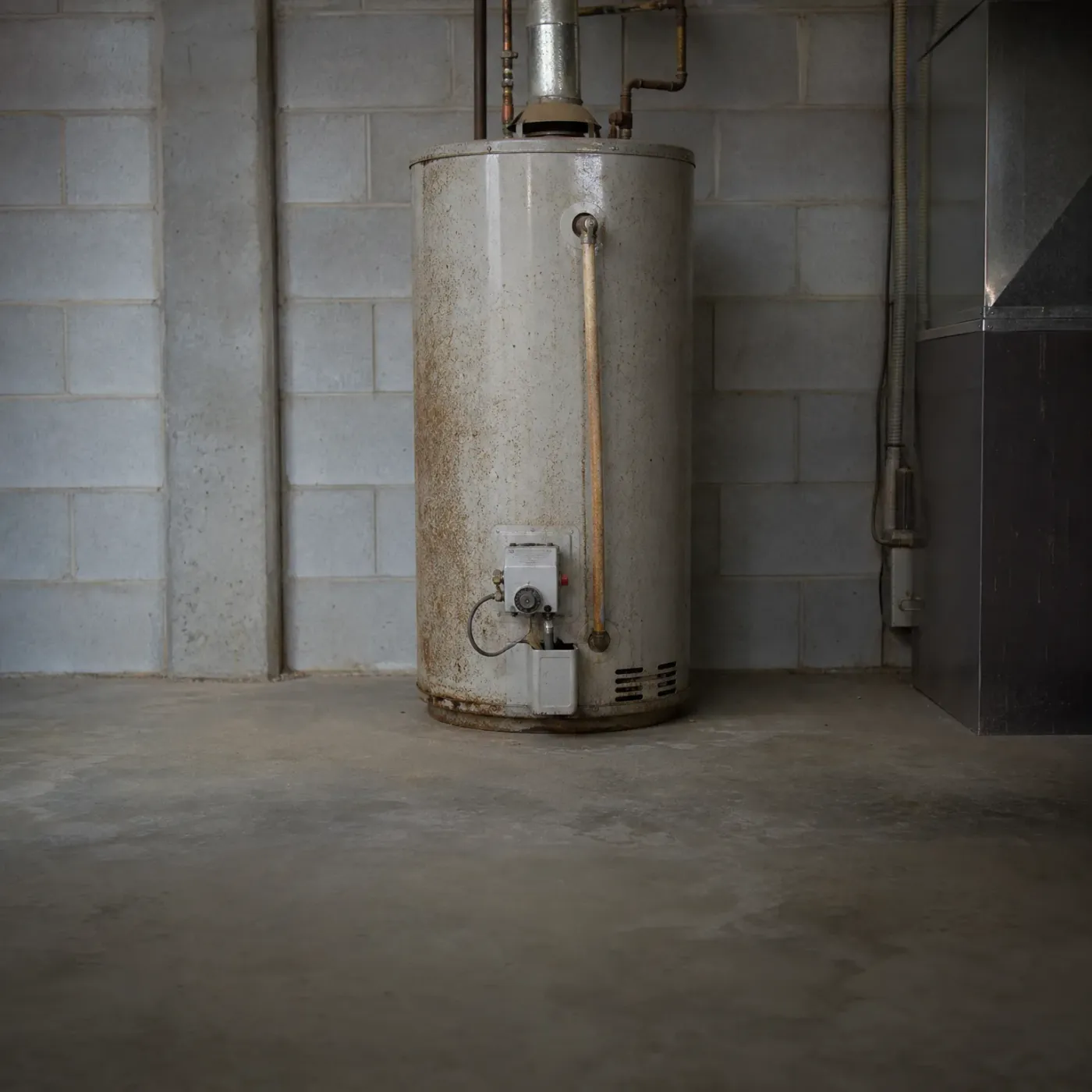
A rusted gas water heater with a flue pipe stands against a concrete block wall on a bare concrete floor, next to a dark metal duct or furnace cabinet at right.

On borrowed time

Rust like this along the tank and the pipes above it means the steel underneath is giving out. Once it shows on the outside, it's already further along on the inside. A tank in this shape can hold for a while or fail in a week, and there's no way to tell which from looking.

Is your water heater trying to tell you something?

Go look at the base of the tank. Rust along the seam, or a damp ring on the floor where it sits, means the tank is failing from the inside and it won't seal back up. Listen when it's heating: popping or rumbling is sediment baked onto the bottom, and on well water that layer builds faster, which makes the burner work harder to reach the same temperature. Check the water itself. Rusty or cloudy water at the hot tap, or a sulfur smell, points at the tank, not the pipes. A pilot or burner that won't stay lit is worth a look too. Left alone, a tank like this can let go all at once, and a utility room floor built for a little condensation isn't built for a full tank's worth of water.

A woman wrapped in a thick beige fleece blanket sits on a sofa with an open book on her lap, beside a lit table lamp, with a frost-covered window behind her.
A gray-haired woman in a cream knit sweater stands in a dimly lit kitchen at night, looking to her right, with a round loaf of bread in the foreground and a dark window and potted plant behind her.
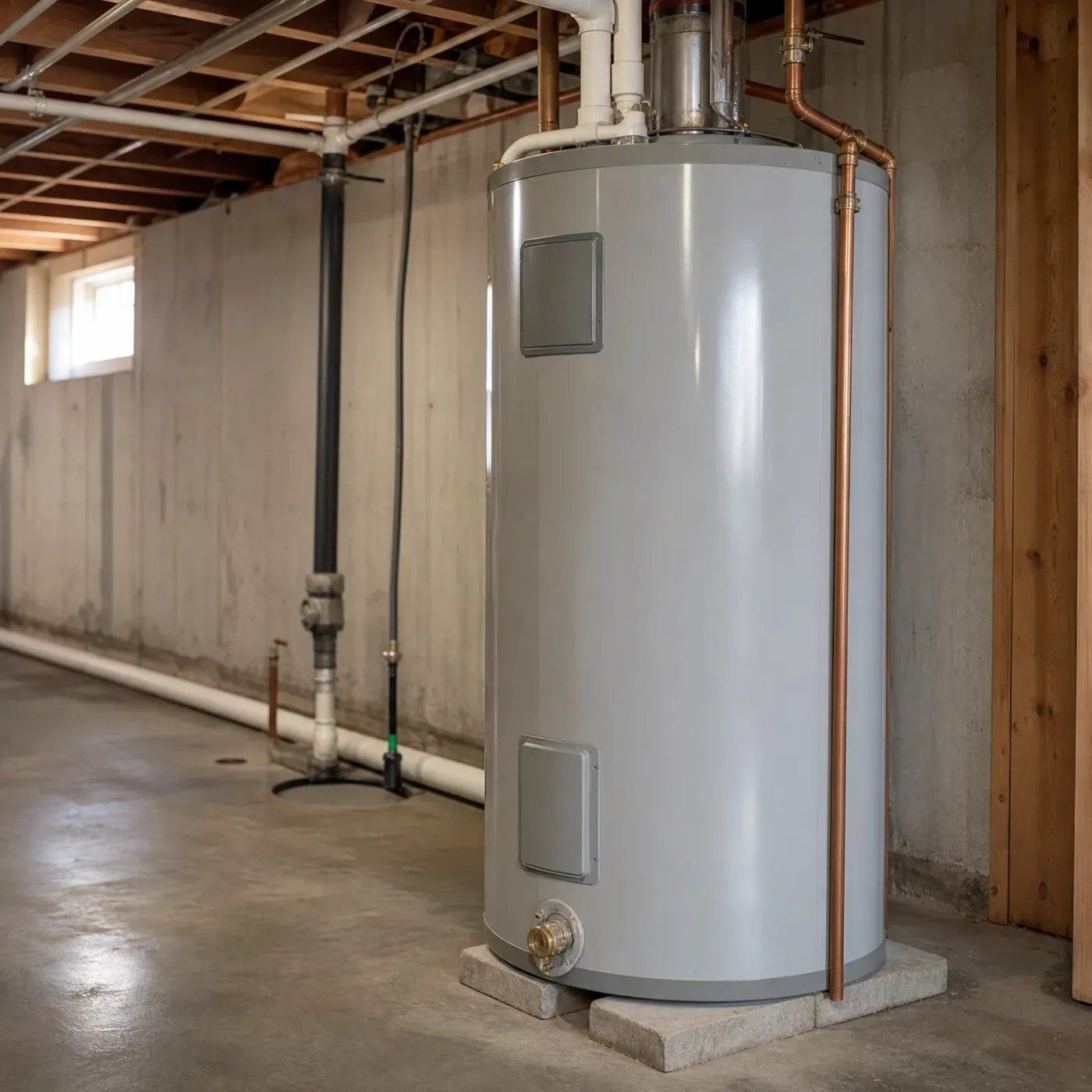
A large white cylindrical water heater on concrete blocks in a basement with poured concrete walls, exposed joists, copper and PVC piping, and a small window.

Get your water heater to the right pro

Send the form and the search for an installer is over.

Describe your water heater job, and a local pro who handles it gets in touch.

Find my pro

You're not committing to anything by asking.

An old rusting cylindrical gas water heater with copper and steel pipes and a flue stands against a concrete basement wall beside metal ductwork on a bare concrete floor.
Before you get your water heater installation
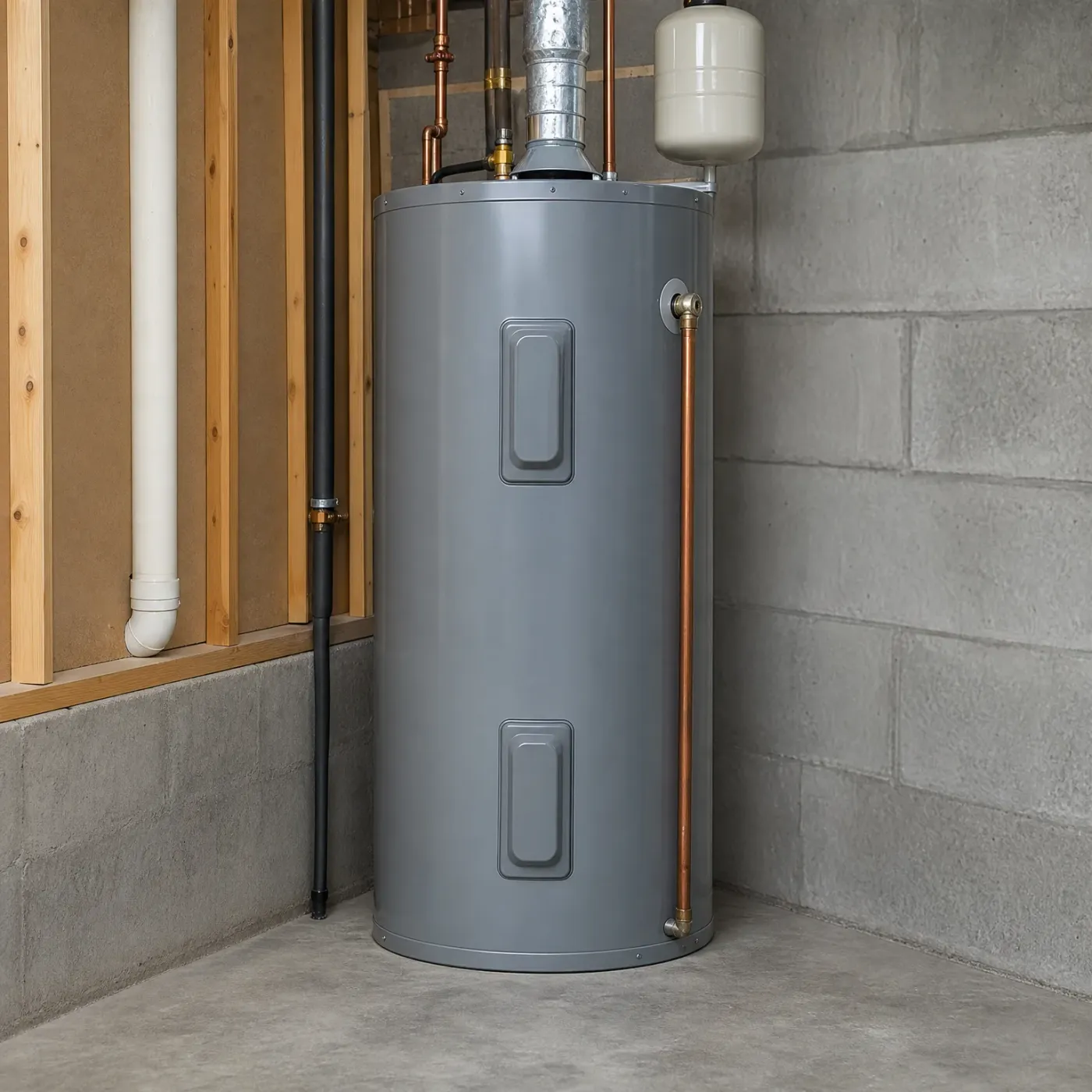
A gray cylindrical water heater with copper piping and an expansion tank stands in a basement corner beside a concrete block wall and exposed wood framing.
After you get your water heater installation

What's inside the tank

A gas water heater heats by running a flame under the tank and through a flue that runs up the center to the exhaust. Every mineral in the water that doesn't stay dissolved ends up on the bottom of that tank, and Idaho's hard well water carries more of it than most. Over years that layer insulates the bottom from the flame, so the burner runs longer to get the same water hot, and the steel underneath it corrodes faster than the sides. That's why the bottom seam is usually where a tank fails first, not the top or the fittings. A water softener ahead of the tank slows this down, but it doesn't stop it.

Why gas tanks go first

An electric water heater warms water with elements submerged inside the tank, where scale builds on the element itself instead of baking onto the tank floor. A gas tank doesn't get that break. The flue running through the middle of the tank adds a second surface where sediment and heat work on the metal at once, which is part of why gas units tend to land earlier in the 8 to 12 year range than electric ones do. Since most homes in Idaho run gas, this is the wear pattern worth watching for here. The tank doesn't fail gradually. It holds, then the seam goes.

A gray-haired bearded man in a dark coat and scarf dusted with snow stands smiling in a dimly lit entryway with a white front door, a side table with a lit lamp, an oval mirror, and a patterned rug.
An older bearded man in a dark snow-dusted coat and gray scarf stands just inside a dimly lit home entry, with a framed picture, lit table lamp, and an adjoining room with a fireplace behind him, and snow visible through the open door.
A gray-haired, bearded man in a dark snow-dusted coat stands smiling in a dimly lit entry hall with a staircase, a lit table lamp, a framed picture, and a living room visible through a doorway.
An older man with gray hair and a beard, wearing a dark jacket dusted with snow, stands smiling in a dimly lit hallway with lamps and a living room visible behind him.
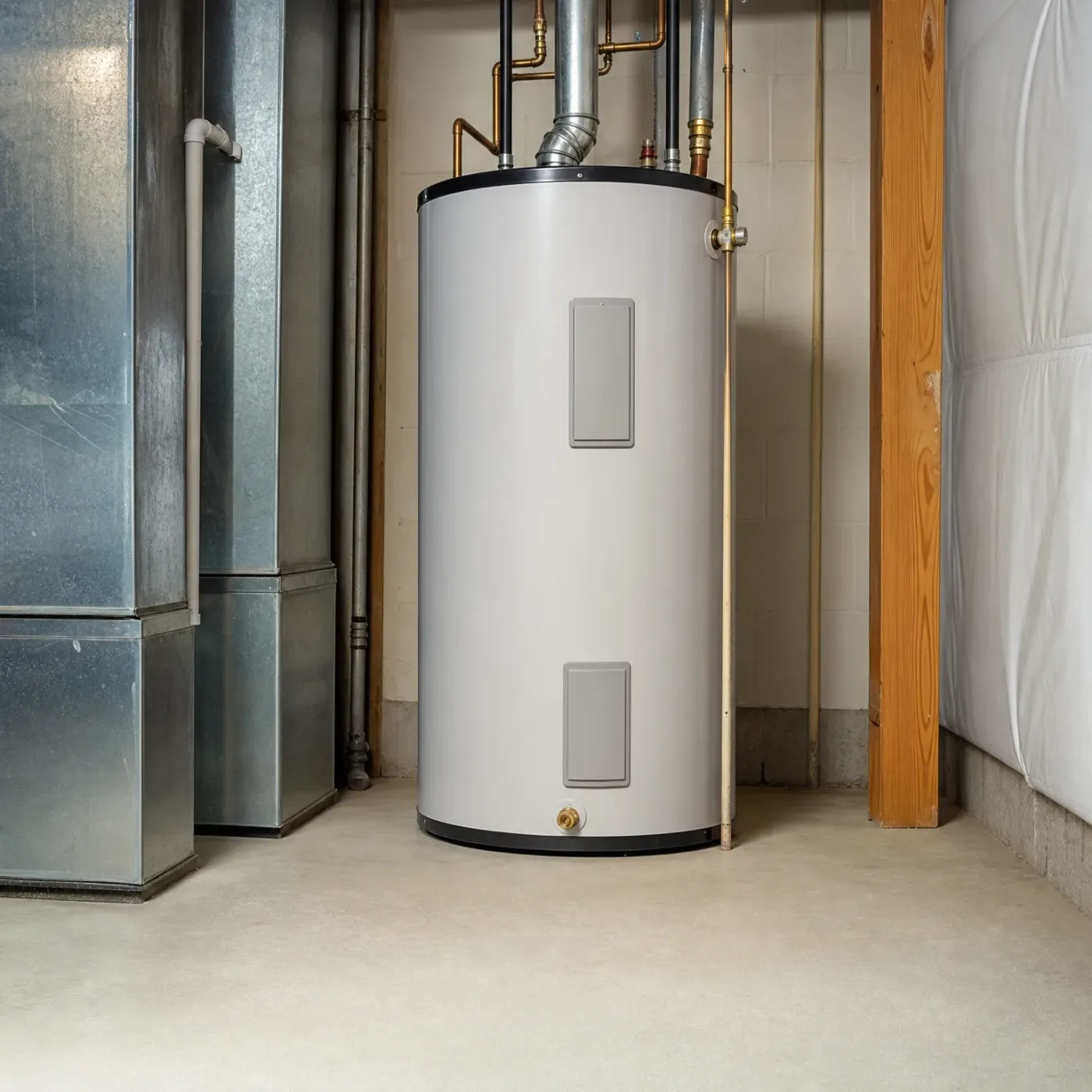
A white cylindrical water heater with two access panels stands on a concrete floor in a basement corner, beside galvanized ductwork, copper and metal pipes, a wooden post, and a concrete block wall.

Still doing its job

This tank sits clean next to the ductwork, both access panels shut, no streaking on the metal. The fittings at the top are tight and dry. A unit like this just needs its yearly look so it keeps running this way.

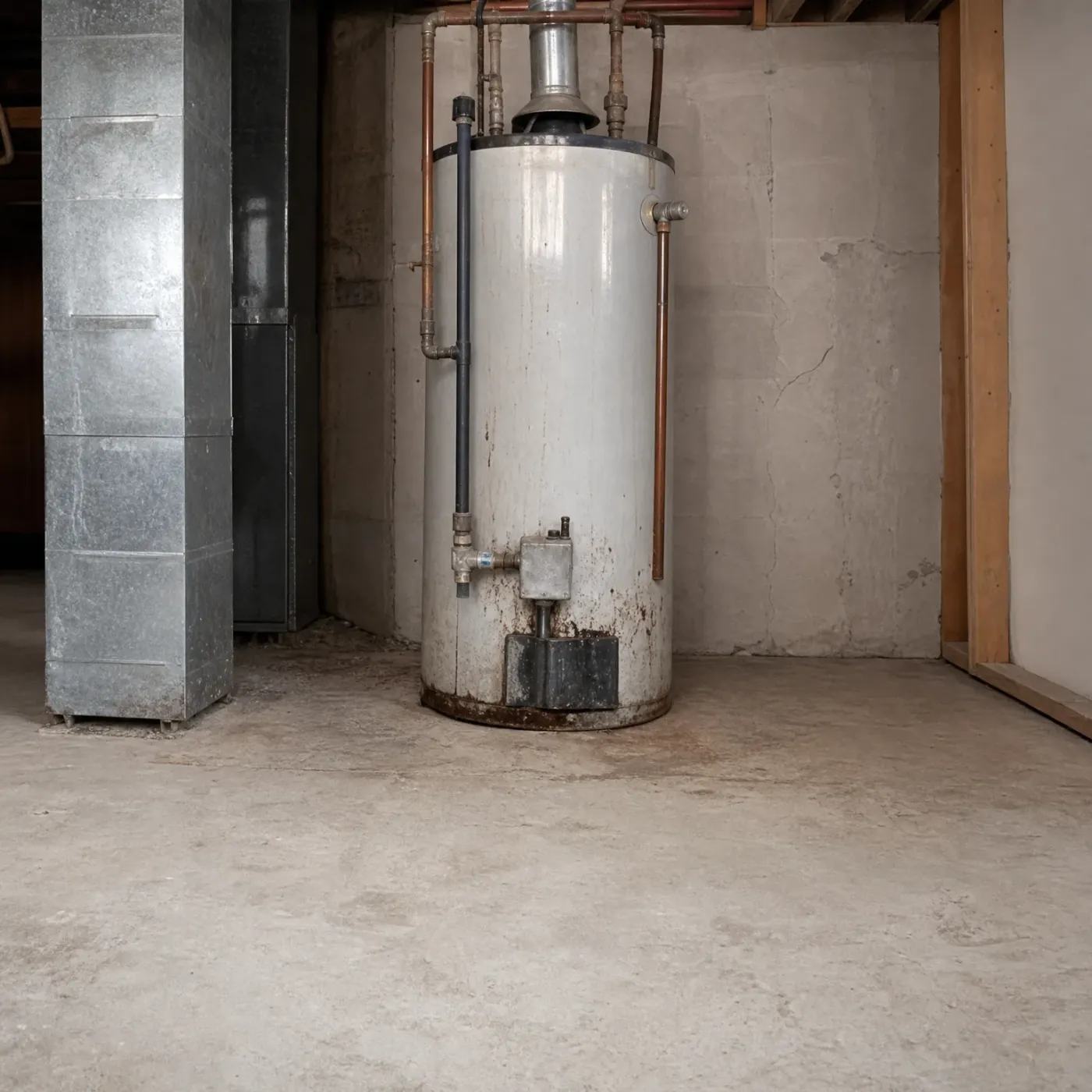
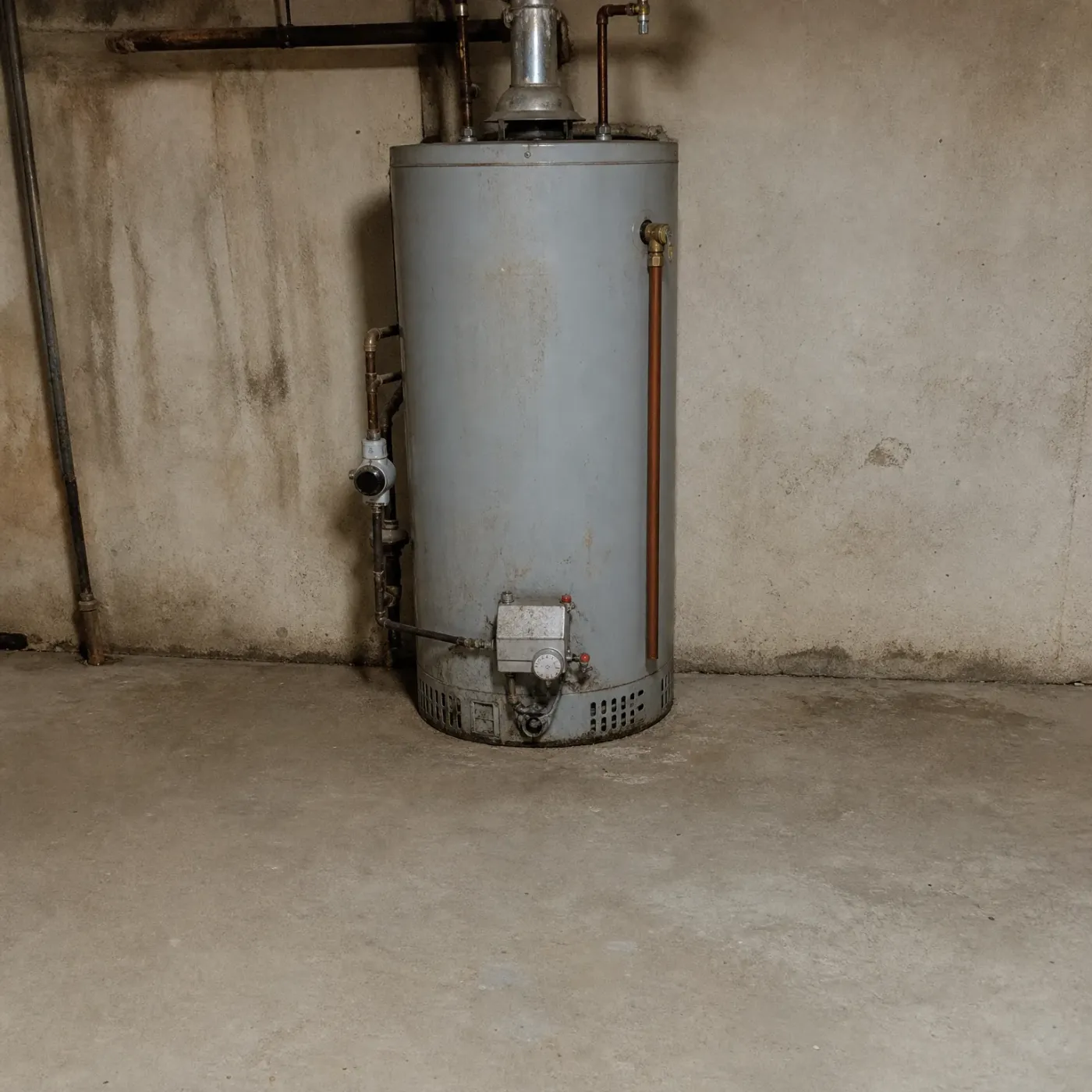
An older gray cylindrical gas water heater with copper and steel piping and a flue, standing on a concrete floor against a stained concrete wall.

Past its working life

Bare concrete, an old tank, and that flue pipe climbing straight up the back wall. At this age the gas control and the relief valve are worth a straight check before winter, not after it quits.

51.6% of homes statewide heat with gas

More than half of Idaho homes heat with gas, and yours is probably one of them. That burner under the tank is also why gas water heaters here tend to wear out sooner than electric ones, since every reheat cycle sends more minerals onto the burner and flue.

ACS 2020-2024 5-year B25040

A woman in a cream cardigan and jeans stands with one hand raised facing an open front door of a gray horizontal-siding house, with a black lantern wall light, a potted shrub with yellow flowers, and a stone-faced porch column.

Where that leaves your water heater

Eight to twelve years is the range, and a gas tank in Idaho tends to land on the earlier side of it because of the burner, the flue, and whatever minerals your water is carrying. Rust at the seam, a damp floor, popping sounds when it heats: any one of those means the tank is closer to the end than the middle. None of it means you have to figure out the next step alone.

Once you send the form, finding someone to look at it is off your plate. You'll be matched with a contractor who works on water heaters like yours and knows what Idaho water does to a tank over the years, and they'll reach out to you directly. You keep up the house. This is just the part where someone else takes it from here.

A living room corner with a light beige sofa holding a textured taupe cushion, a large ceramic vase of olive branches by a window, a framed neutral artwork on the wall, and a dark bowl with stacked books in the foreground.
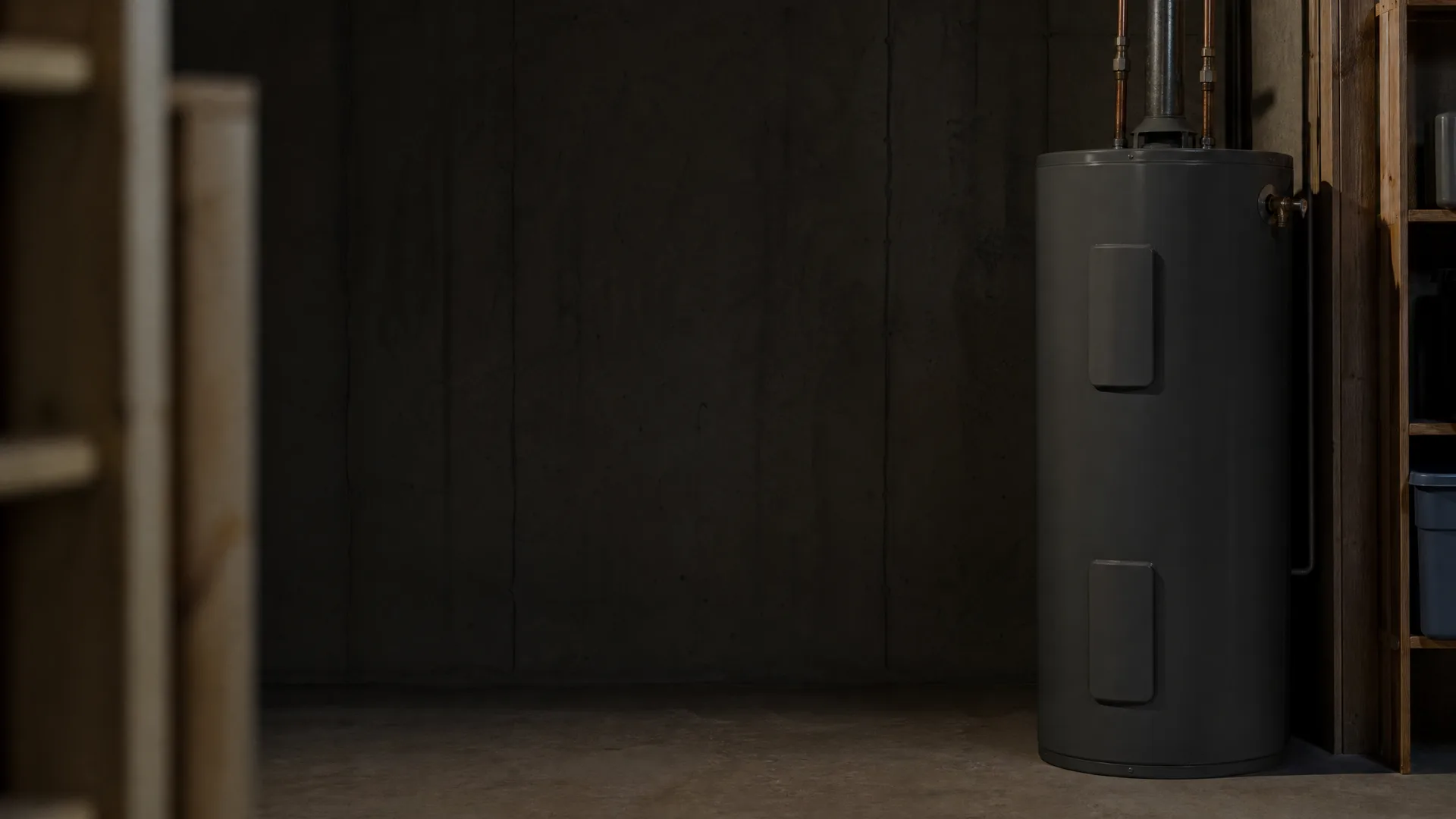
A dark gray cylindrical water heater with copper pipes at its top stands against a concrete basement wall, with wooden shelving and framing in the foreground at both edges.

The right pro for this job

Send the form and stop researching installers for the new water heater.

Step 1 of 3: Equipment