

Tank or tankless water heater for an Idaho home

Skip searching for a water heater pro and answer a few questions instead.

Skip the calls

Most Idaho homes do fine with a tankless water heater, if the home already heats with gas. Gas tankless units heat water as it runs, so you are not paying to keep forty gallons hot all day for a shower you take at 7am. In a house with electric water heating, a tank is usually the simpler call, since power here is cheap and running a tankless unit on electric service often means upgrading the wiring to handle the draw. Either way, the choice comes down to what your home is already set up to burn. Tankless units cost more to install and last longer. A tank costs less up front and is easier to replace in the same spot when it fails. If your gas line and venting already suit a tankless unit, switching makes sense. If they don't, that work adds to the job before the water heater itself goes in.

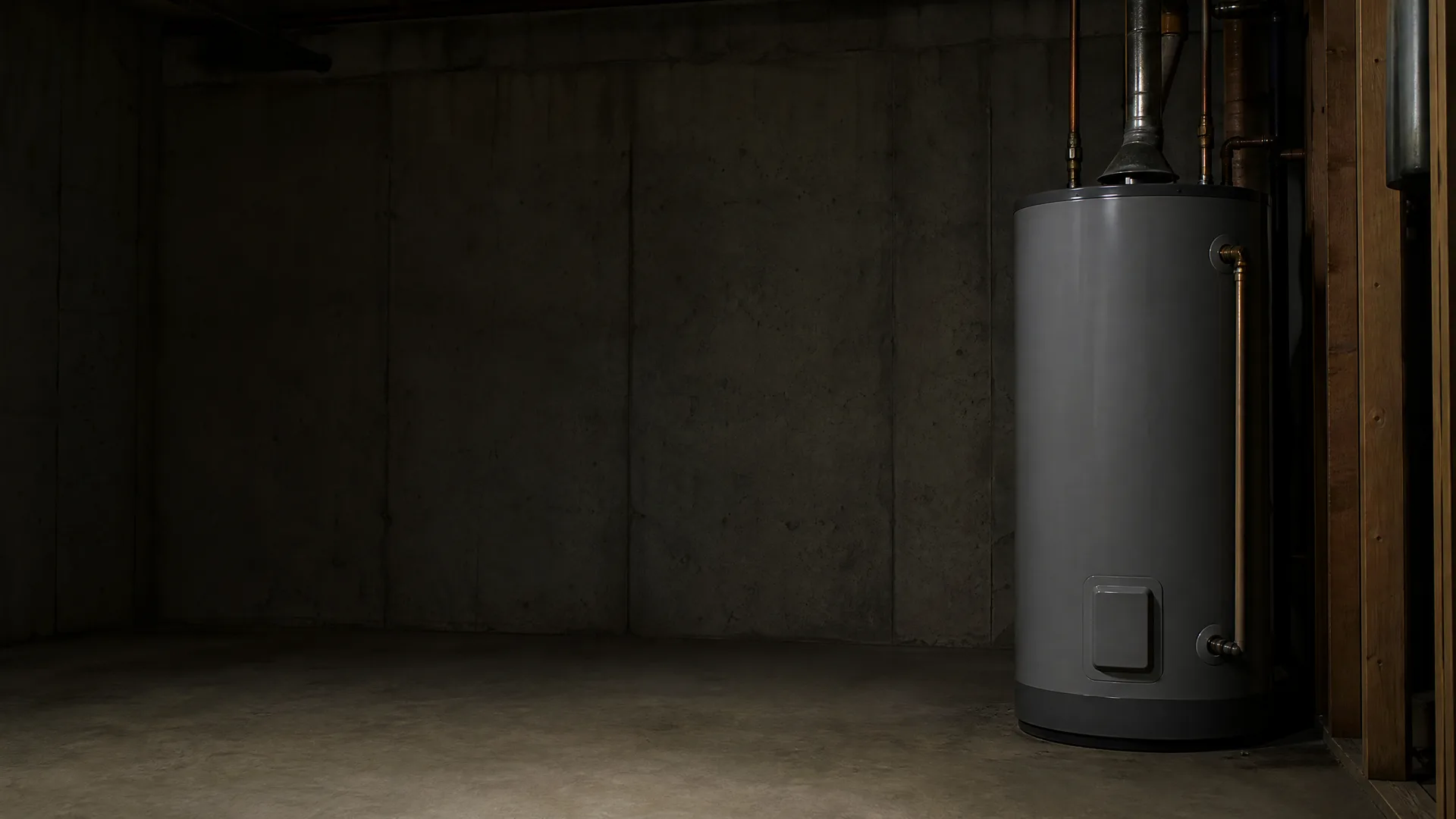
A gray cylindrical water heater standing on a concrete floor in a basement corner, with copper pipes and a metal duct running overhead along bare concrete walls.

Tank water heater

A tank keeps forty gallons hot and ready, which works fine on gas or electric. It costs less to install than tankless, and most plumbers can replace one in a day. The tradeoff is the tank runs out if the whole house showers back to back.

A white cylindrical water heater with rust stains and two access panels stands in a basement corner between a painted concrete block wall and a bare concrete wall, with metal pipes running up and alongside it on a concrete floor.

Tankless, aging and corroded

A tank heater does not fail quietly. Rust like this on the jacket usually means the tank itself is corroding from the inside, and once it starts leaking, it does not stop. A unit in this shape is worth replacing before it fails on its own schedule, not yours.

Gas Tankless or Gas Tank

Gas tankless

  • Needs a gas line sized for it, so a home with a smaller existing line may need that upgraded before install.
  • Ties to the vent that's already running, which a plumber has to confirm can handle the new unit.
  • Keeps running hot water as long as the gas supply holds, so a run of showers back to back won't drain it.
  • Costs more upfront than a tank, since the venting and gas line work add to the install.
  • Has no tank to fail from sediment or rust, which is the most common reason tanks need replacing.

Gas tank

  • Works with the gas line and vent already in the house, so install is usually straightforward.
  • Holds forty gallons ready to go, which covers most households unless several showers happen in a row.
  • Costs less to put in than tankless, since there's no venting or gas line work to do.
  • Needs replacing sooner than tankless, since the tank itself wears from sediment and rust over the years.
  • Keeps that forty gallons hot around the clock, even during the hours nobody's using it.
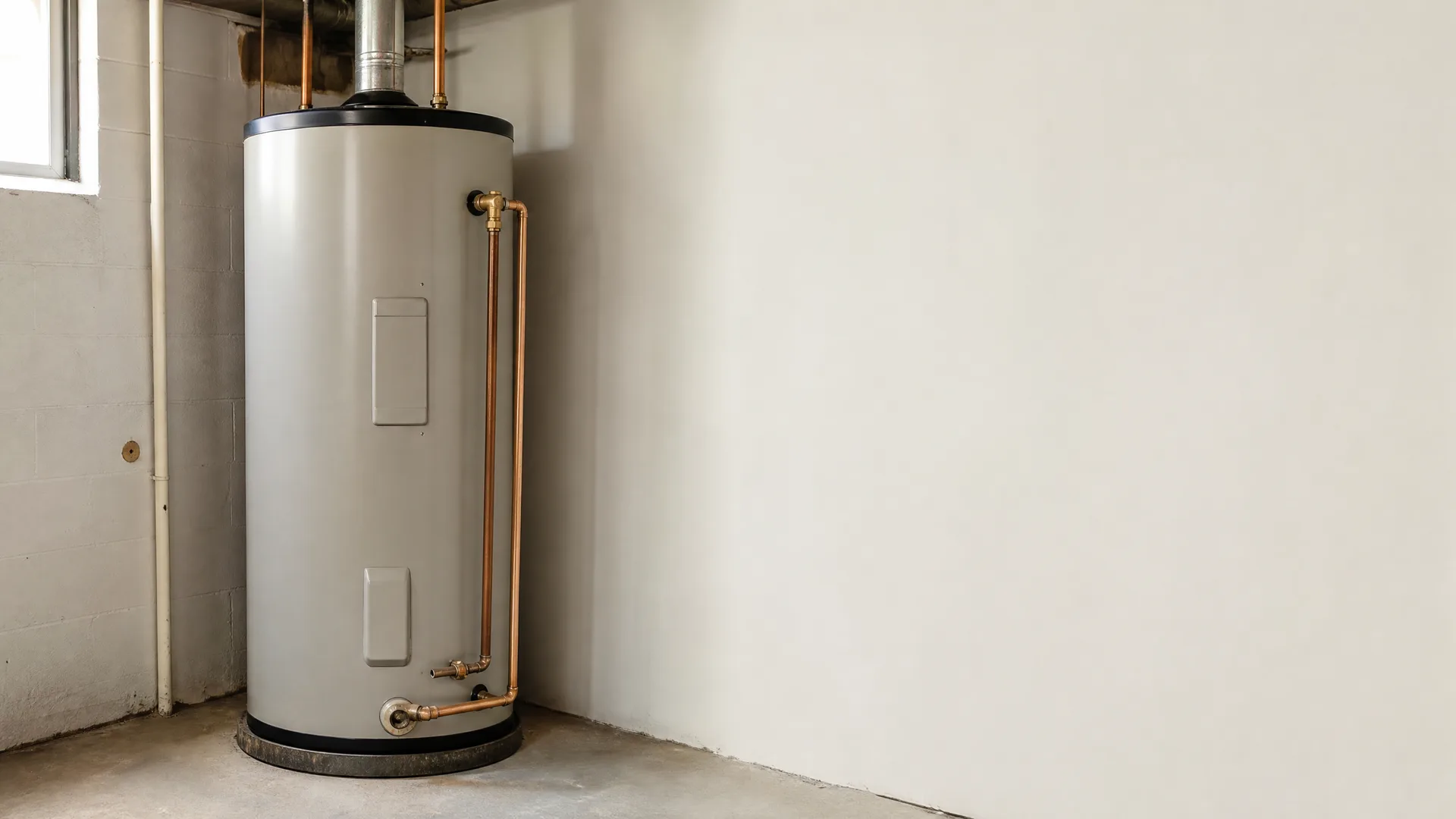
A tall gray cylindrical water heater with copper piping and a flue stands in the corner of an empty basement room with concrete block and painted walls.

Why gas tankless suits Idaho winters

A gas tankless unit heats water on demand, which matters more once the ground gets cold. Incoming water temperature drops hard here in winter, and the unit has to work harder to bring it up to the temperature you set. A tank heater just holds water at that temperature, so the season doesn't change how it runs. Either way, a plumber can tell you what size unit your household actually needs once they see your gas line and your fixture count.

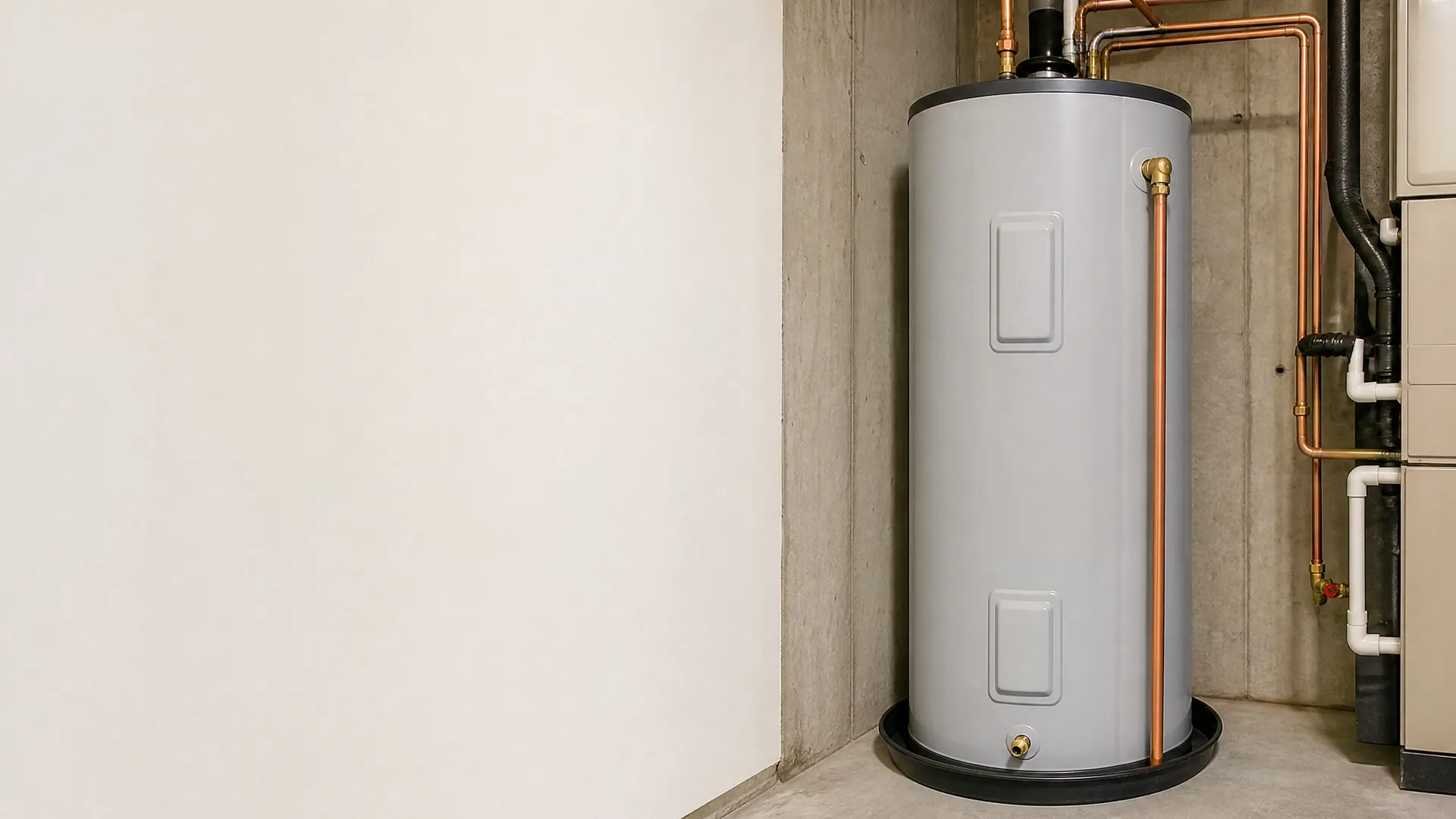
A gray cylindrical water heater stands in a drain pan against a concrete wall, with copper and white pipes running along the wall to the right and a plain light wall on the left.

Where electric still makes sense

If your home heats water with electric, a tank is usually the simpler call. Electric tankless units draw a lot of power at once, enough that older electrical panels sometimes can't support one without an upgrade. A plumber who installs both types regularly will know within a few minutes of looking at your panel and your gas line whether tankless is realistic here or whether a tank is the straighter path to a working system.

Is your water heater actually keeping up?

A tank that's struggling shows up fast in an Idaho winter. Water runs lukewarm partway through a shower, or the second load of dishes gets cold water instead of hot. You might hear it rumble or pop as sediment builds on the bottom, which makes it work harder to heat the same forty gallons. A tankless unit that's undersized shows a different problem: the flow rate drops when two fixtures run at once, like a shower and the washing machine. Left alone, a tank with heavy sediment buildup can shorten its own life and eventually leak, which means water damage to whatever's stored nearby or the flooring underneath it.

A smiling woman with dark shoulder-length hair in a cream V-neck sweater sits at a marble counter with a glass of red wine, with a kitchen and softly lit living room behind her.
A woman in a dark green sweater laughs while seated at a marble kitchen island with a glass of red wine, with open shelving, cabinets and a living room visible behind her.
A woman with long dark hair in a cream knit sweater laughs while looking off to the side, seated at a counter with a glass of red wine, in a dimly lit living room with a sofa, lamp, framed pictures and houseplant behind her.
A smiling woman with long dark hair in a beige sweater sits at a marble kitchen counter with a glass of red wine, with a dimly lit living room behind her.
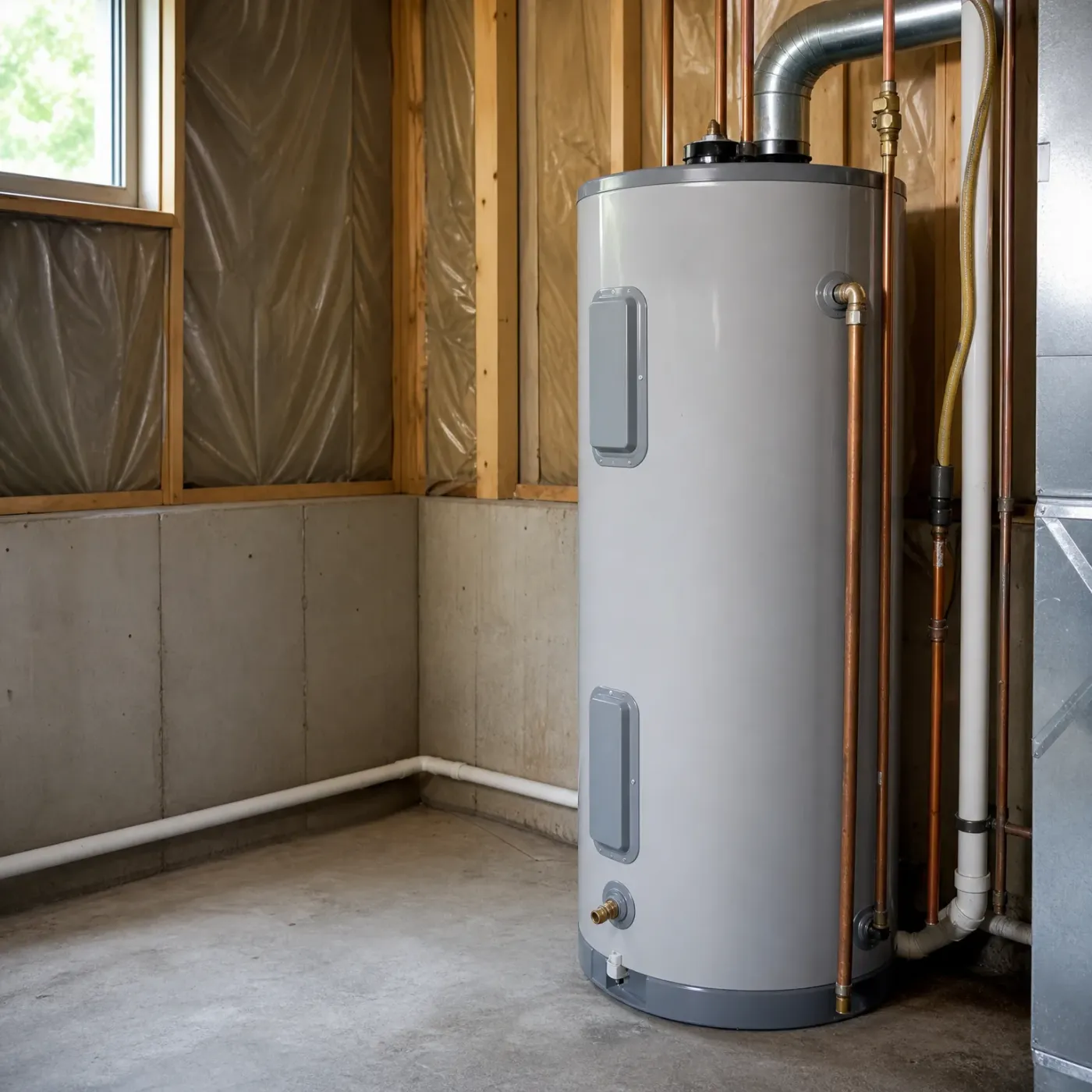
A gray cylindrical water heater stands in a basement corner with exposed wood framing, plastic vapor barrier, concrete walls and floor, copper and PVC piping, and a metal flue vent.

Skip calling around

The pro who reaches out is licensed in Idaho.

One form replaces the calls you'd make to find a water heater pro.

Answer a few questions

There's no charge for the request.

A closed laptop and a cream mug of coffee on a coaster sit on a dark wooden table, with a potted plant at left and a kitchen counter, tiled backsplash and shelf of ceramics in the background.

How a tankless unit decides to fire

A tankless water heater has a flow sensor at the inlet. Open a hot tap and that sensor reads the flow, and the unit's control board fires the burner to match it. There's a gas valve that modulates, opening wider for a full shower and less for a trickle at the bathroom sink. The heat exchanger takes the water from there and brings it up to the temperature you set on the unit, usually somewhere around 120 degrees. Close the tap and the burner shuts off within seconds. No tank sitting there holding water at temperature in between.

That's a different set of parts than a tank heater has, and when something goes wrong, it's usually one of them: the flow sensor, the igniter, or the venting. Figuring out which takes someone who installs these regularly, since a lot of plumbers in Idaho still mostly work on tanks. You'd otherwise be calling around asking who actually does tankless, getting quotes that assume a straightforward swap when your gas line or venting might need work first, and explaining your setup from scratch to each one. A local plumber who installs tankless units through the winter here already knows what an Idaho gas line and vent run usually need to support one.

A living room corner with a beige upholstered armchair holding navy and striped cushions, a small round wooden side table with a carved bowl and a potted green plant, a framed landscape picture on a pale wall, built-in shelving, and a curtained window.
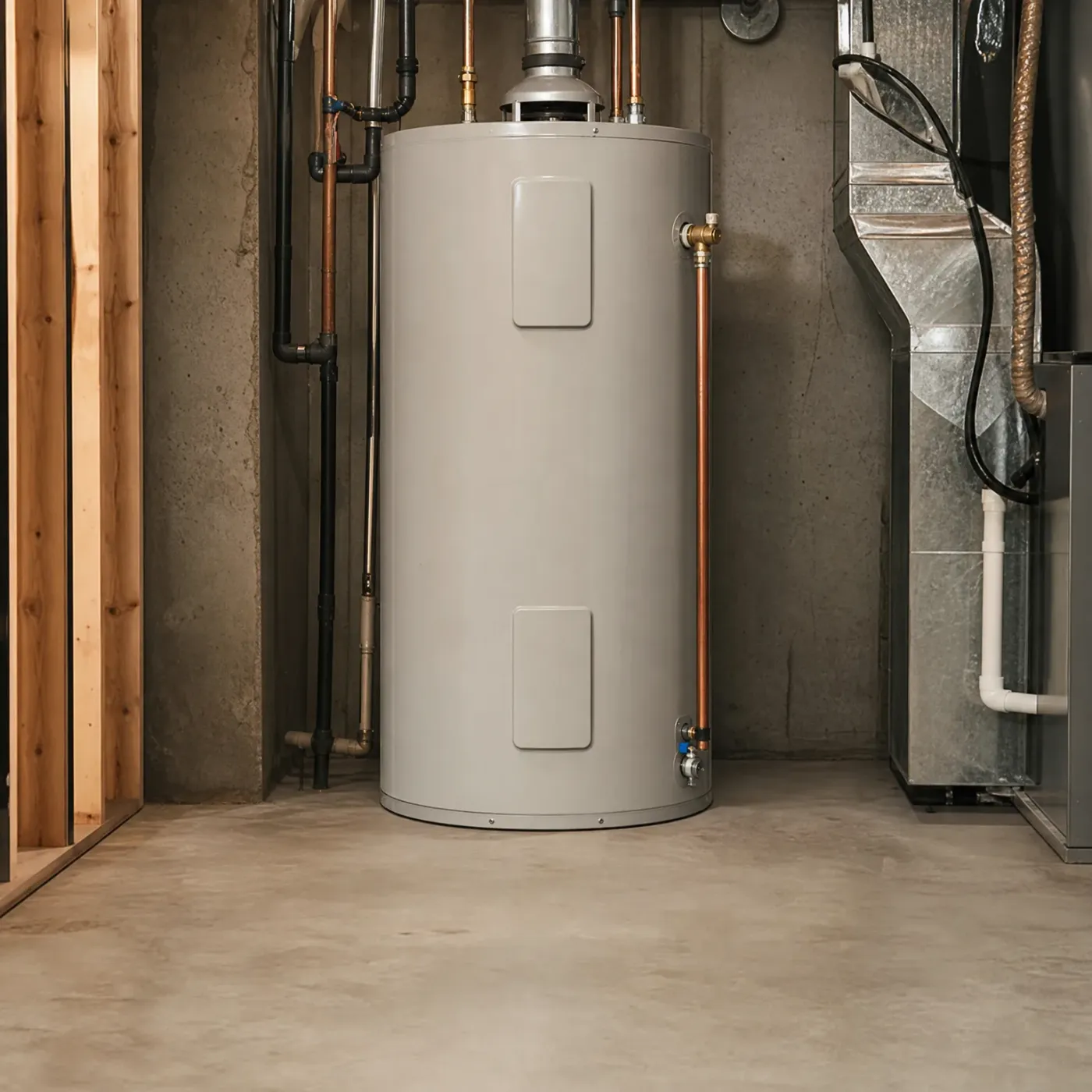
A gray cylindrical water heater with copper piping and access panels stands against a concrete basement wall beside ductwork and vertical pipes.

A tank doing its job

This is what a working tank looks like: copper lines in, a pressure-relief valve doing its job, sitting next to the furnace it shares the basement with. No rust on the jacket, no sign of a leak at the fittings. A tank in this shape just needs the occasional flush to keep sediment from building up on the bottom.

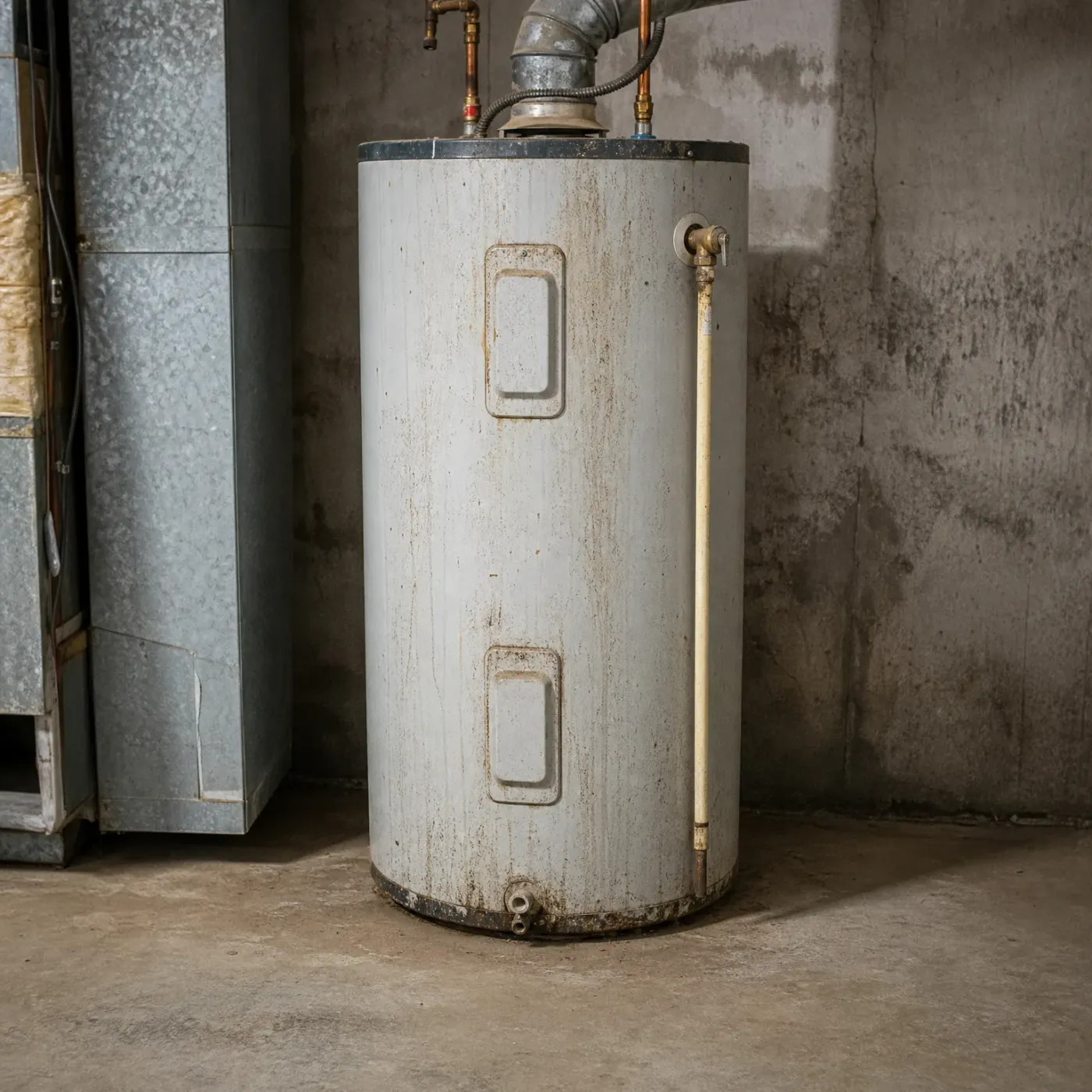
An old rust-streaked cylindrical water heater with two access panels, copper pipes and a flue at the top, and a discharge pipe along its side, standing on a concrete floor beside galvanized ductwork against a bare concrete wall.

A tank past its working life

Rust like this on the jacket means the tank is corroding from the inside too. The relief valve and discharge pipe are doing their part, but they cannot stop a tank from failing once it's gone this far. Galvanized fittings at the top are another sign of age. This is a tank to replace, not repair.

A smiling bearded man in a navy sweater sits at a candlelit dinner table with a glass of red wine, a bowl of salad, and plates of food in the foreground.
A woman with dark hair in a bun reclines on a sofa with her eyes closed, wrapped in a cream fleece blanket, a closed blue hardcover book resting in front of her, with a lit lamp and a vase of dried flowers in the background.

51.6% of homes statewide heat with gas

More than half the homes in Idaho heat with gas, and if yours is one of them, a gas tankless unit is a straightforward swap. You already have the gas line and the venting a plumber needs to size for it. If your water heater runs on electricity instead, that changes the conversation.

ACS 2020-2024 5-year B25040

Gas or electric decides it

  • Gas tankless makes sense if your home already runs gas, since the line and venting are mostly in place.
  • A tank still works fine for gas or electric homes, and costs less upfront to put in.
  • A licensed local plumber installing your unit knows which Idaho winters do to incoming water temperature and sizes the gas line for it.
  • Working with one local contractor means a single quote and a single install crew, not five companies calling back.
  • Sediment, rumbling, or lukewarm water partway through a shower are signs worth having a local plumber look at either way.
  • The choice comes down to what your home already has running to it, gas or electric, more than preference alone.

The answer is simpler than it feels. If your home already runs gas, a tankless unit is a straightforward swap, the line and venting a plumber needs are mostly already there. If you're on electric, a tank still does the job, and it costs less to put in. That's the whole decision, more than any preference about one or the other.

What you want next is someone who installs these for a living here, not somewhere with a different climate and different code. A plumber working year-round in Idaho knows what incoming water temperature does to a tankless unit once it gets cold, and sizes the gas line with that in mind. They've seen what a sediment-choked tank looks like after a few winters, and what a rumbling tank usually means before it fails outright.

You also don't need five companies showing up to bid this. One licensed local contractor looks at your home, tells you straight whether gas or electric settles it for you, and gives you one quote instead of a stack to compare. No explaining your water heater's history to five different people, no sorting through five different answers to the same question.

Whether you end up with a tank or tankless, the install is the part that matters most. A unit sized wrong or vented wrong causes problems no matter which kind it is. Get that part right, with someone who does this work here, and the rest takes care of itself.

A gray cylindrical water heater with copper pipes and a metal flue stands against a concrete wall in a dim basement with a bare concrete floor.

Describe it once

Only one pro gets your request, so you hear from one company.

Step 1 of 3: Equipment