Tell us about the job
Takes about a minute. No obligation.
Before a contractor quotes a water heater replacement here, they work out what the existing venting can handle and whether the space around the unit draws enough combustion air. Utility gas heats more occupied homes in Bear Lake County, Idaho than any other fuel, at 43.8% (2020-2024 ACS 5-year). That majority means gas appliances, flues, and draft conditions are the norm a contractor walks into, and a unit that vents or draws air differently from the one it replaces needs those details resolved at the quote stage. Get those wrong and the new heater runs short of its rated output or backdrafts into the living space.
Older wiring and undersized service panels are where water heater installations in Bear Lake County most often stall. Half the homes in Bear Lake County, Idaho were built in 1974 or earlier (2020-2024 ACS 5-year). A house built that long ago was wired around load expectations that a modern water heater can exceed before you even look at the unit itself. If the panel cannot carry the new draw, the contractor has to price that work before pricing anything else. The equipment choice comes after.
What a Water Heater Installation Covers
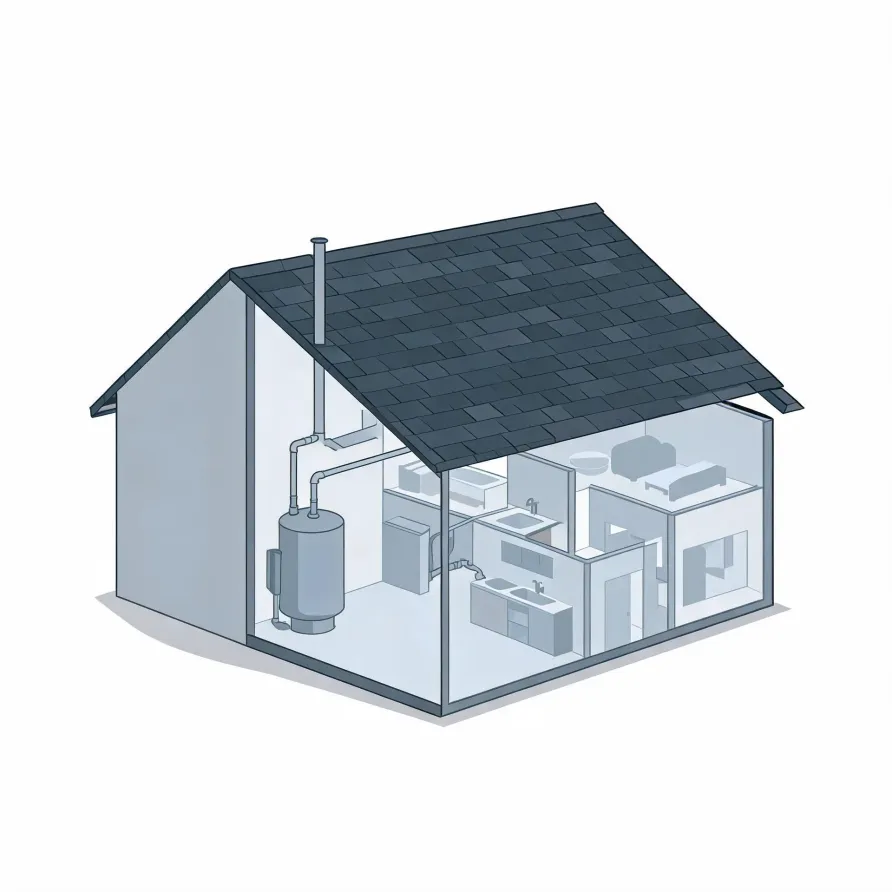
The tank or heating unit is the heart of the system. On a storage-tank water heater, the tank itself sits in a utility room, basement, or garage and holds a ready supply of hot water. A tankless unit mounts on a wall and heats water on demand as it passes through.
The cold-water supply line feeds into the unit from the home's plumbing, and the hot-water outlet line runs from it to every fixture in the house. A pressure relief valve attaches directly to the tank as a safety device, and the flue or exhaust vent exits through the wall or roof to carry combustion gases outside.
The drawing shows a representative layout, and a licensed contractor determines exactly what applies to this house and its plumbing configuration.
Find a contractor in Bear Lake CountyBear Lake County, by the numbers
131 severe weather events were recorded in Bear Lake County, Idaho between 2015 and 2024.
NOAA National Centers for Environmental Information, Storm Events Database, bulk CSV export, events 2015-01-01 through 2024-12-31.Half the homes in Bear Lake County, Idaho were built in 1974 or earlier (2020-2024 ACS 5-year).
U.S. Census Bureau, 2020-2024 American Community Survey 5-Year EstimatesBear Lake County, Idaho holds 4,020 housing units (2020-2024 ACS 5-year).
U.S. Census Bureau, 2020-2024 American Community Survey 5-Year EstimatesOwners occupy 89.5% of the occupied homes in Bear Lake County, Idaho (2020-2024 ACS 5-year).
U.S. Census Bureau, 2020-2024 American Community Survey 5-Year EstimatesSevere Weather Events in Bear Lake County
Water heaters work harder when outdoor conditions swing wide, and the stress that weather puts on a home's plumbing and heating equipment varies a great deal from one county to the next. What happens outside in Bear Lake County shapes what a water heater installed here has to handle over its life.
131 severe weather events, 2015–2024. Source: NOAA National Centers for Environmental Information, Storm Events Database.