Send the form, and lining up the water heater tune-up stops being yours to chase.
120 degrees is the setting most plumbers use in Idaho, and 120 is also the point where scalding risk drops off and the tank stops wasting gas heating water hotter than anyone uses. Some households with young kids or older adults set it to 130 for the dishwasher or to kill off bacteria in the tank, then dial it back down after.
Power here is cheap, so if your water heater runs on electric, the dial setting matters less for your bill than it does for a gas tank. Gas is what heats most homes in Idaho, and gas water heaters are the ones where a few degrees on the dial show up on the statement.
Finding the right setting is the easy part. What's harder is knowing whether your tank is holding that temperature the way it should, whether the thermostat reads true, or whether sediment has built up at the bottom and is making the burner work harder than it needs to. That's a maintenance visit, not a dial you turn yourself.
If you've been putting off getting someone out to look at it, that's the part this page can take off your plate. You won't have to search through contractors, call a handful of them, explain the same thing about your tank three or four times, or sit with a stack of quotes trying to guess which one is fair. Send the form once and that whole search is no longer something you have to manage.
What's below walks through the numbers in more detail, including why Idaho's dry summers and cold winters both play a part in where that dial should sit. But if you already know you need a tune-up or a temperature check, the button is right there.
What temperature should I set my water heater to in Idaho?
You want a number you can actually use, not a range. Maybe the water coming out of the tap feels too hot or too lukewarm, or you just moved in and the dial on the tank is set to something you didn't choose. With gas prices low in Idaho and power cheap too, it's not really about the bill. You just want the dial set right and left alone.
120 degrees
120 degrees is where most plumbers in Idaho set the dial, and it's the right number for nearly every household. Water heaters sold here almost always run on gas, and a gas tank set higher than 120 burns more fuel to hold water at a temperature nobody uses straight from the tap anyway. Set much lower, below 120, and the tank becomes a place where bacteria can grow between uses. Set the dial to 120 and check it once, maybe six months after you move in or after any work on the tank, since dials get bumped or drift on their own. That one check is usually all the upkeep this needs.
Fill out one form instead of calling around for a water heater tune-up.
It costs nothing to send, and you don't have to hire anyone.
How the Dial Actually Controls Heat
The dial inside the panel marks Warm, Hot and Very Hot instead of numbers on a lot of tanks, so a thermometer at the tap is the only way to know what you're actually getting.
Gas water heaters hold a thermocouple or flame sensor near the pilot that shuts gas flow off if the flame goes out, which is why a heater won't just run away past its setting.
The thermostat reads the water near the bottom of the tank, not the water leaving through the pipe, so the two can differ by several degrees.
Turning the dial up doesn't heat water faster, it just raises the point where the burner shuts off, so recovery time between showers stays about the same.
Sediment that settles on the bottom of a gas tank sits between the burner and the water, so the thermostat reads cooler than the water actually is and calls for more heat than needed.
A tank set well above 120 builds pressure faster inside the pipes, which is part of what the temperature and pressure relief valve on top is there to vent.
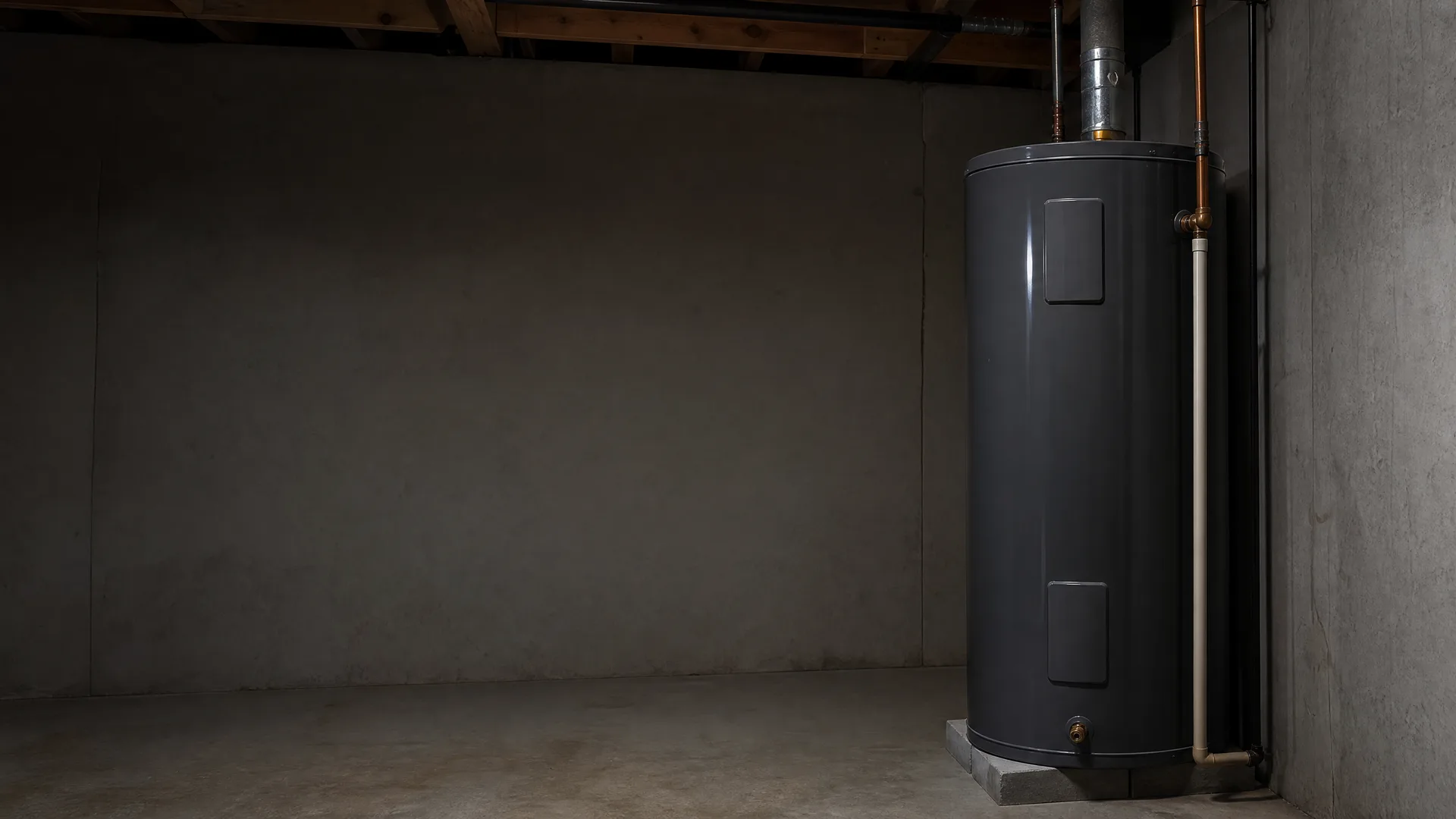
A gas water heater doesn't work the way the dial makes it look. There's no digital readout, just a knob that marks Warm, Hot and Very Hot, so unless you check the water at the tap with a thermometer, you're guessing at the actual number. Inside the tank, the thermostat sits low, near the bottom, and it only knows the temperature of the water right around it. The water that reaches your shower or sink has traveled up through the tank and out through a pipe, and by the time it gets there it can read several degrees off from what the thermostat saw. That gap is normal. It's also why sediment matters. Gas tanks build up a layer of mineral deposits on the bottom over time, right between the burner and the water above it. That layer acts like insulation in reverse, it slows down how fast heat gets through, so the thermostat reads cooler than the water really is and tells the burner to run longer than it should. None of this means turning the dial up gets you hot water faster. It doesn't. All a higher setting does is move the shutoff point higher, so the burner runs longer before it stops, not sooner. And a tank running consistently above 120 pushes more pressure through the pipes, which is exactly what the pressure relief valve on top is built to handle when it gets vented off.
51.6% of homes statewide heat with gas
Gas heats more homes in Idaho than anything else, and yours is likely one of them. A gas water heater holds its set temperature closely once the thermostat is dialed in, so getting that dial right at 120 matters more here than in a home working around an electric tank.
ACS 2020-2024 5-year B25040
Setting it and leaving it alone
120 works for most households and it works quietly. Nobody adjusts the dial again, the tank holds that temperature on its own, and the only reason to think about it is a yearly check to confirm the setting hasn't drifted. Gas tanks in Idaho tend to hold a set temperature well once the thermostat is dialed in. If the water at the tap still tests close to 120 after a year, there's nothing to do. That's the appeal of leaving it where most plumbers set it in the first place, one decision instead of a habit of checking.
Turning the dial yourself
Some households turn it up toward 130 for a dishwasher that runs better hot, or because someone in the house is older or younger and the lower setting feels unreliable. That means testing the water at the tap afterward, not just trusting the dial, since the markings on a lot of tanks only say Warm, Hot and Very Hot. It also means remembering that water hotter than 120 scalds faster, so anyone adjusting it needs to decide that tradeoff is worth it for their household rather than defaulting to it.
120 is the number. Set the dial there, check it at the tap with a thermometer, and leave it alone until the next yearly check. That's the whole answer. What trips people up isn't the number, it's knowing whether the dial on their own tank is actually holding it, since a lot of panels only say Warm, Hot and Very Hot with nothing to confirm you're getting 120 and not 135. A gas tank in Idaho holds its setting well once it's dialed in right, so getting it right once matters. If you'd rather not spend a weekend calling around for someone to check the thermocouple, confirm the setting, and look at the rest of the tank while they're at it, sending the form does that part for you. No explaining the problem twice, no sorting through quotes from people you don't know anything about. You already know what the dial should read. The rest is making sure the tank agrees with you.
Finding a pro stops being your job
Explain the job once and skip repeating it on every call.