Profile view of a bearded man wearing a dark green baseball cap and a dark gray T-shirt against a plain light background.

Why your hot water is lukewarm in Idaho

Step 1 of 3: Equipment

Why is my hot water lukewarm instead of hot?

Lukewarm water usually shows up gradually. You turn on the tap expecting hot and get something in between, not cold, just not enough. Someone is waiting to shower or run a load of dishes and the water never gets where it should. In most Idaho homes the water heater runs on gas, so the usual culprits are different from what you'd check on an electric unit.

A failing burner or a bad thermocouple is usually the cause

On a gas water heater, lukewarm water almost always points to the burner not staying lit long enough or not burning hot enough to heat the full tank. A worn thermocouple can shut the gas off early, or sediment built up on the bottom of the tank can sit between the burner and the water, soaking up heat that should be going into your shower. A cracked dip tube is another cause. It lets cold water entering the tank mix straight into the hot water near the top instead of sinking to the bottom where the burner heats it. Any of these leaves you with water that never reaches full temperature, no matter how long you run the tap.

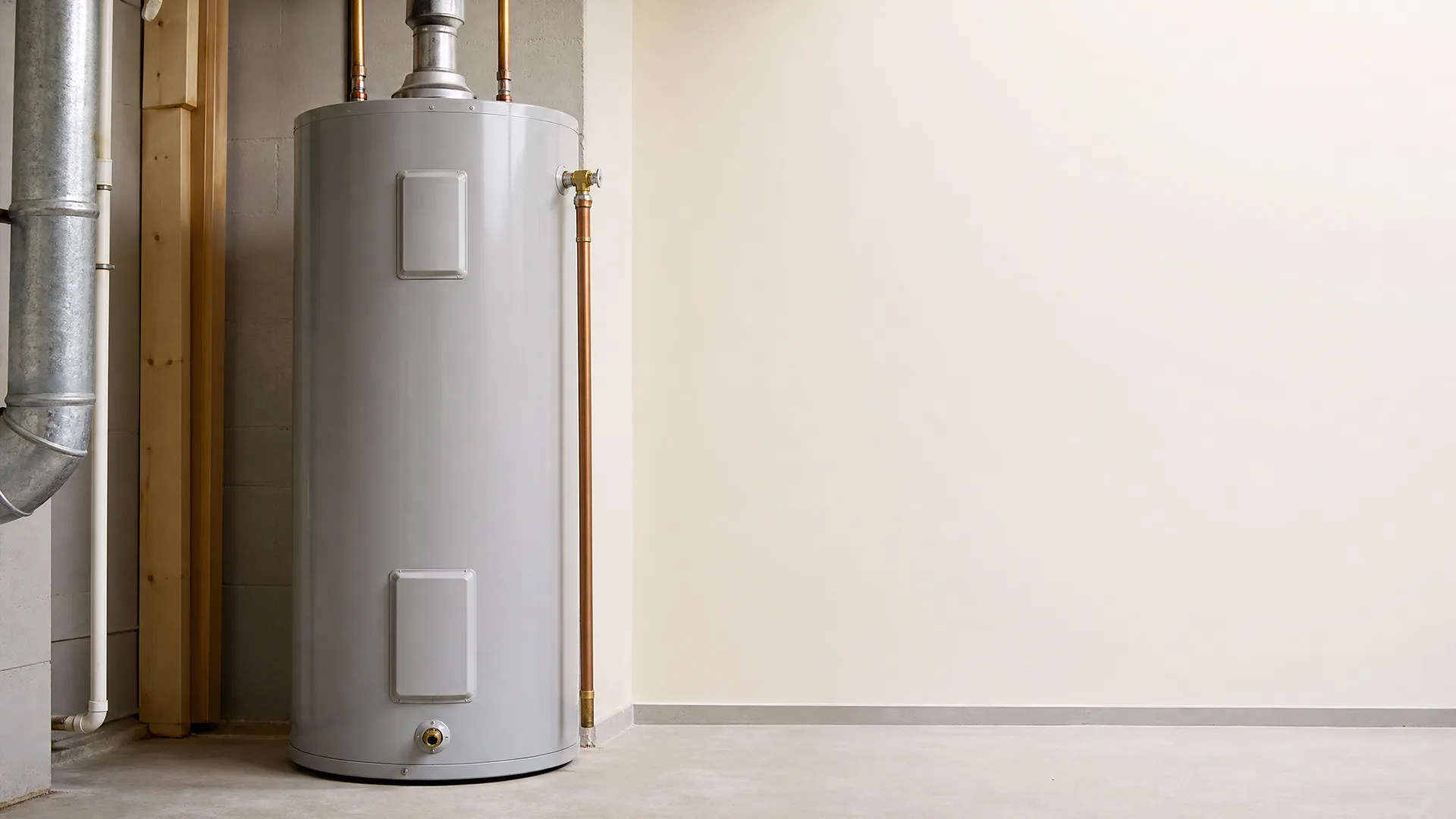
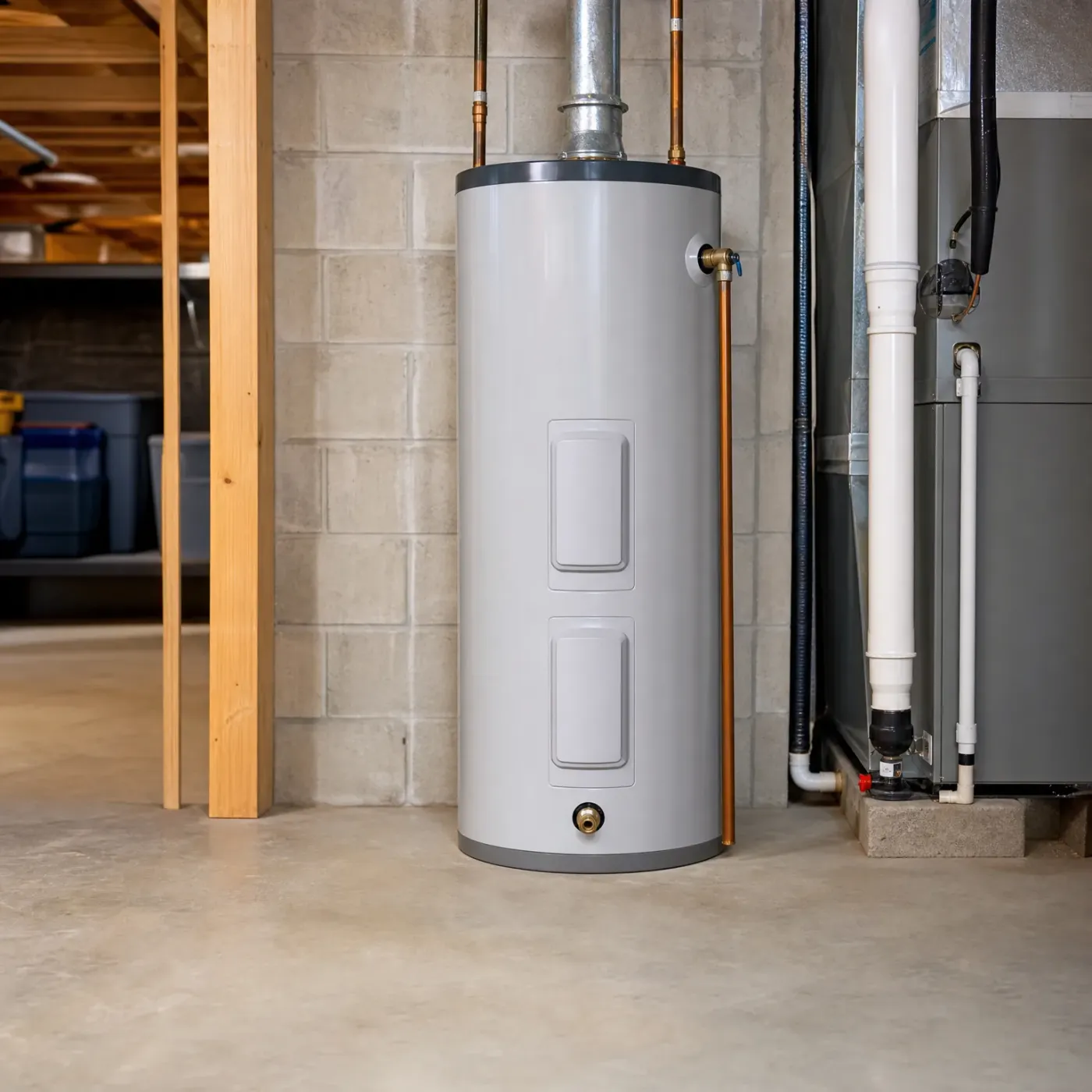
A gray cylindrical water heater with copper pipes stands against a concrete block wall in a basement, next to white PVC piping and a gray furnace, with wood framing and storage bins at left.

Working the way it should

Gas water heaters like this one hold a steady supply, so the shower after you and the dishwasher an hour later both get hot water. The tank heats, holds, and recovers without anyone timing their turn. You run the tap and it's hot, same as yesterday.

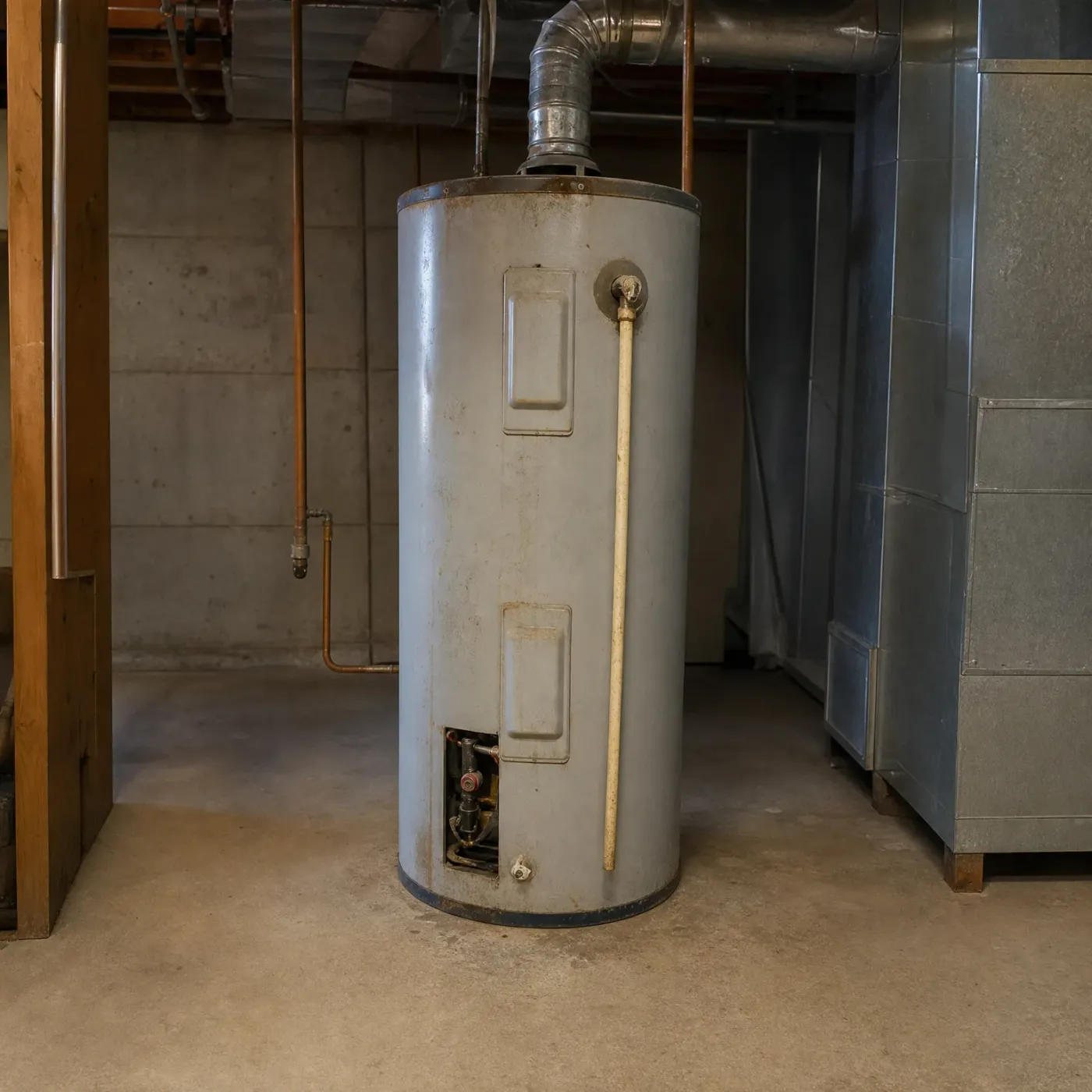
An older gray gas water heater with a metal flue pipe stands on a concrete basement floor beside ductwork and exposed copper piping.

Rust and a weak flow

Surface rust on the tank and a relief valve that keeps dripping are signs the unit is struggling to keep up. Idaho's hard dry summers push water heaters hard, and an older tank like this one may not recover fast enough to keep two showers back to back both hot.

A woman with long blonde hair in a light blue shirt leans back on a beige sofa with her eyes closed, in a softly lit living room with cushions and a blurred plant and shelf in the background.
A woman with long dark hair in a gray knit sweater sits on a gray sofa with a cushion, looking toward a window in a living room with framed pictures and a lamp in the background.
A woman with long dark hair in a light grey knit sweater sits on a sofa indoors, looking to her right, with a framed landscape picture, a potted plant and a curtained window behind her.
A woman with long dark hair leans back against a gray sofa with her eyes closed, in a living room with a curtained window, a potted plant, and a dark screen in the background.

The burner under a gas water heater only runs long enough to bring the tank up to the temperature on the thermostat. Cold water comes in through a dip tube that carries it to the bottom, so it heats before it has a chance to mix with the hot water sitting near the top waiting for you. When that system works, the two stay separated until you turn the tap. A few things can break that order. A cracked dip tube lets incoming cold water spill out near the top instead of the bottom, so it cuts into the hot water on its way to the faucet. Sediment that has settled on the bottom of the tank sits right where the burner's heat needs to pass through, so less of it reaches the water. A thermocouple reading the flame wrong can signal the gas valve to cut off early. Even a thermostat set to the right number can fail in a way that ends the heating cycle before the tank is actually full of hot water.

What's happening inside the tank

  • A gas water heater fires the burner under the tank until the thermostat senses the set temperature, then shuts off until it drops again.
  • A dip tube sends incoming cold water to the bottom of the tank, so it does not mix with the hot water waiting near the top.
  • A cracked or broken dip tube lets cold water dump in near the top, so what comes out the tap is already diluted.
  • Sediment settling on the bottom of the tank sits between the burner and the water, so less heat actually reaches the water above it.
  • A thermocouple that is reading wrong can tell the gas valve to cut the flame before the water ever reaches full temperature.
  • A thermostat set correctly but failing can still let the burner shut off early, so the tank never finishes heating a full cycle.
A smiling older woman with gray hair in a cream knit sweater stands in a dimly lit kitchen beside a window showing snow outside, with a round loaf of bread on the counter in the foreground.
A woman with her hair in a bun holds a sleeping young child against her chest, both wrapped in a textured beige knit blanket on a sofa in a dimly lit room with a lamp, framed picture, and bookshelf behind them.

Matched to your water heater job

Explain the job once and skip repeating it on every call.

There's no charge for the request.

A gray cylindrical water heater with copper pipes stands in a basement corner beside a metal duct and wood framing, next to a plain beige wall and concrete floor.

What a bad dip tube does

If the dip tube cracks or breaks off, incoming cold water dumps out near the top of the tank instead of the bottom. It mixes straight into the hot water sitting there waiting for you. The thermostat still reads the temperature near the top as correct, so the burner doesn't fire to make up for it. You end up drawing a tank that looks full but is really half cold water wearing a hot water label.

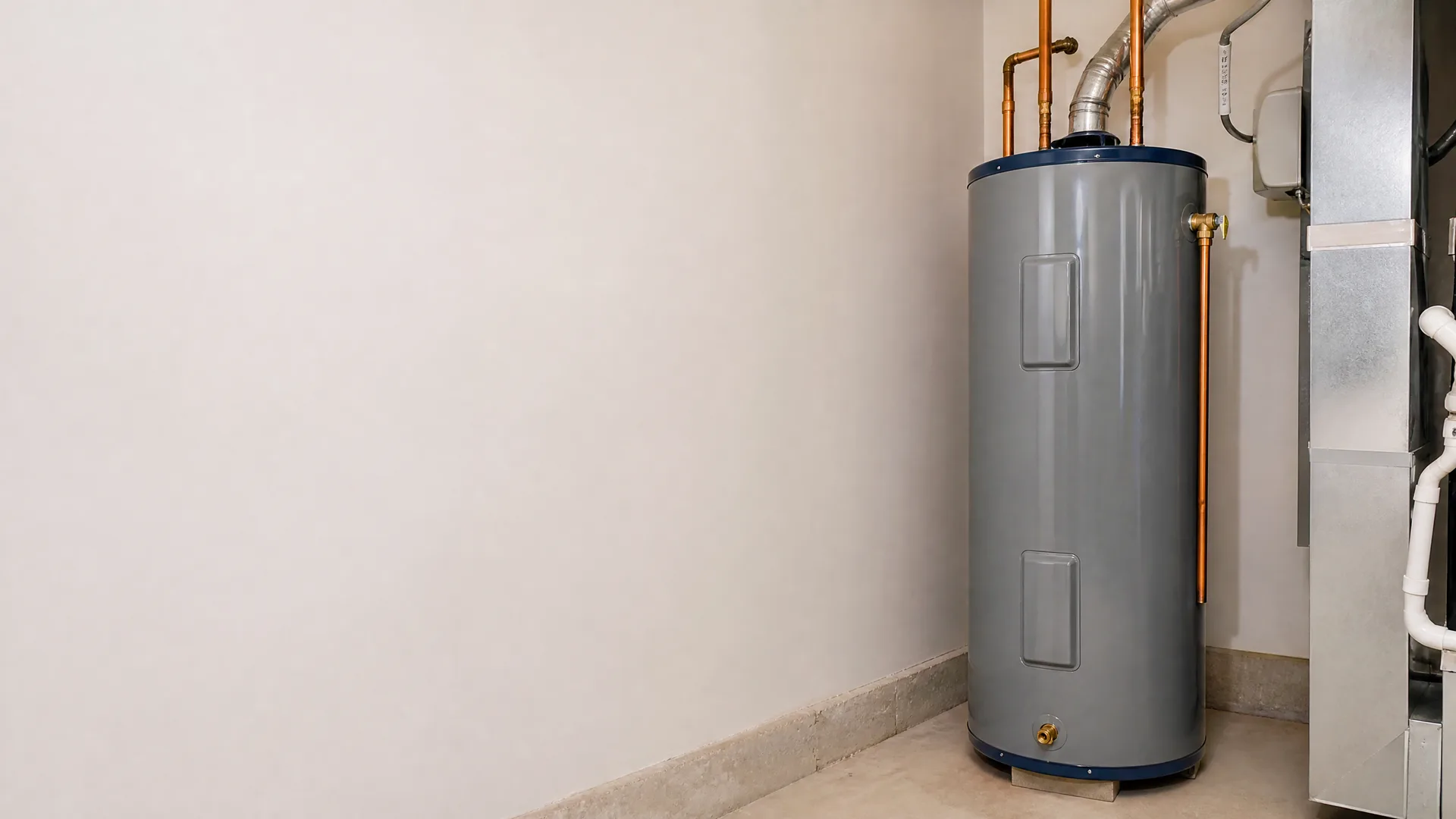
A gray cylindrical water heater with copper pipes stands in a corner of a basement utility room beside metal ductwork and white PVC piping.

Why sediment changes the math

Gas burns under the tank, and the heat has to pass through the metal floor to reach the water above it. A layer of sediment sitting on that floor acts like a blanket between the flame and the water, so less heat gets through before the burner shuts off. The tank ends up holding water that never reached the set temperature, and the thermostat has no way to tell, since it reads from higher up the tank.

A woman stands in the open doorway of a white stucco house holding the dark door, facing a man in a black cap and shirt seen from behind in the blurred foreground, with a potted flowering plant beside the entry.

What this means for your house

A cracked dip tube does not announce itself. It just means the next shower in the house is shorter than the last one, and nobody planned for that. Someone is mid rinse when the water turns cool, or the dishwasher runs on water that was never fully hot, so dishes come out greasy. In a gas water heater, this usually gets worse over weeks, not better, because the broken piece can keep breaking down further.

You do not need to know which part failed before you get it looked at. Finding a plumber, explaining the problem, getting someone out to the house, that is the part you can skip. Answer a few questions about your water heater and a contractor who handles this in Idaho will reach out to you directly, so the only thing left for you to do is let them in.

A living room corner with a beige sofa and cushion, a round wooden coffee table holding a pale ceramic vase of eucalyptus stems and a wooden bowl, and a curtained window with a potted plant above a latticed radiator cover in the background.
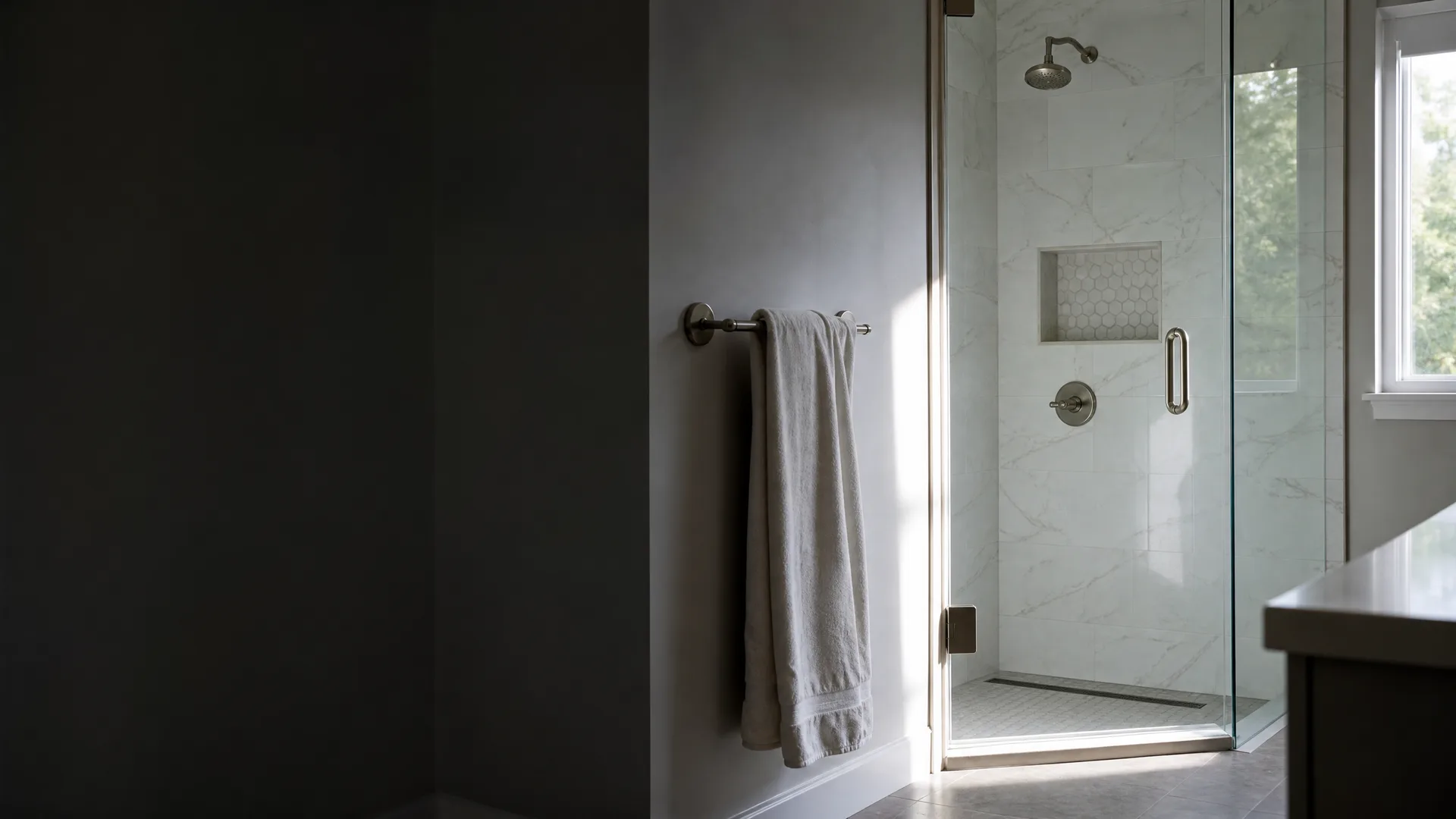
A bathroom with a glass-door shower lined in marble-look tile with a recessed niche and showerhead, a white towel hanging on a wall-mounted bar, and a window with green foliage outside.

You're up before the rest of the house, same as any weekday. You start the shower and step back to let it run hot while you set out a towel on the rail. A minute passes. No steam on the mirror yet, which is normal this early, so you reach in and it's warm, not hot. You wait another minute, moving the towel, checking your phone. Still the same. Outside it's already dry and warm even at seven in the morning, but that has nothing to do with what's coming out of the tap. You step in anyway because someone else needs the bathroom next, and the water never climbs past lukewarm the whole time.

51.6% of homes statewide heat with gas

Most houses in Idaho run a gas water heater, same as yours probably does. The burner under the tank is what's supposed to bring the water up to temperature. When it's lukewarm instead, the fix is usually in the tank or the gas control, not the wiring.

ACS 2020-2024 5-year B25040

A gas water heater that only gets you lukewarm water is telling you something specific: the burner isn't bringing the tank up to temperature the way it should, and that usually comes down to the dip tube, the thermostat, or the gas control. It's not a wiring problem and it's not something that fixes itself by waiting. Once you know that much, the next step is getting someone who works on these tanks every day to look at yours and tell you which it is. That's the part that takes the most out of people, calling around to find a contractor who's free, explaining the same thing to each one, waiting on quotes to come back so you can compare them. You've already done the hard part of figuring out something's wrong. What's left is getting matched with a contractor who handles this kind of repair and having them reach out to you directly, so you're not the one chasing it down while someone in the house is still waiting on a hot shower.

Sunlight falls across a beige upholstered sofa with a textured woven cushion and a chunky knit throw, beside a dark wood cabinet holding a ceramic vase with green leafy branches, near a white-framed window.
A sunlit corner of a room with a wooden side table holding a ceramic vase of green foliage and a wooden bowl, beside a light upholstered sofa with a knit throw and rust-colored pillow, with window shadows cast on a beige wall.
A sunlit room corner with beige walls, a white-framed window with sheer cream curtain, wood floor with a light rug, and a woven basket holding a knit blanket.
A beige ceramic vase holding a leafy green branch sits on a wooden cabinet in a corner, with sunlight through a sheer curtain casting leaf shadows on the wall.
A grey upholstered sofa with a rust-orange velvet cushion and a textured throw sits beside a window with linen curtains, next to a wooden side table holding a pale ceramic vase of olive branches.

A water heater pro near you

Skip searching for a water heater pro and answer a few questions instead.

Skip calling around

You only hire the pro if you want to.