Why your hot water smells like rotten eggs in Idaho

After this form, you can stop searching for a water heater pro.

Step 1 of 3: Equipment

That rotten egg smell is sulfur bacteria living inside your water heater tank, reacting with the magnesium rod that protects the tank from rust. Most homes in Idaho run on well water or municipal water drawn from groundwater, and that water often carries sulfate naturally. Inside the tank, bacteria feed on it and give off hydrogen sulfide gas, which is what you're smelling. It tends to show up worse in a gas water heater that hasn't run hot enough for a while, since cooler water lets the bacteria multiply. It also shows up more after the tank sits unused for a few days, so you might notice it most after a trip. The smell isn't dangerous at the levels found in tap water, but it means something is off balance in the tank, and it won't go away on its own. A contractor can flush the tank, test the water, and replace the rod if that's what's causing it.

A gray-haired man in a dark long-sleeve shirt sits on a gray sofa in a living room, looking toward a sunlit window with sheer curtains.
A gray-haired man in a dark green sweatshirt sits on a sofa in a living room, looking toward a bright window, with a houseplant, lamp, fireplace and framed art behind him.
A gray-haired bearded man in a dark green collared sweater sits on a sofa in a living room with a window, houseplant, floor lamp and bookshelves, looking off to the side.
A gray-haired man in a dark green sweater sits on a sofa in a sunlit living room, looking off to the side, with a framed landscape painting, dining table and shelving behind him.

Is it just the hot water, or all of it?

Check both taps. If the smell is only in hot water and the cold runs clean, the problem is inside the tank, not the water coming into your house. You'll likely notice it strongest in the shower or when you run a sink full of hot water, and it may fade some if you run the tap a while, only to come back once the water's sat in the tank for a few hours. Some households notice it more after the house has sat empty for a day or two, since the water has had longer to react with the rod. Left alone, the bacteria don't damage the tank, but the rod they're feeding on is what keeps it from rusting out, and a rod that's worn through stops doing that job.

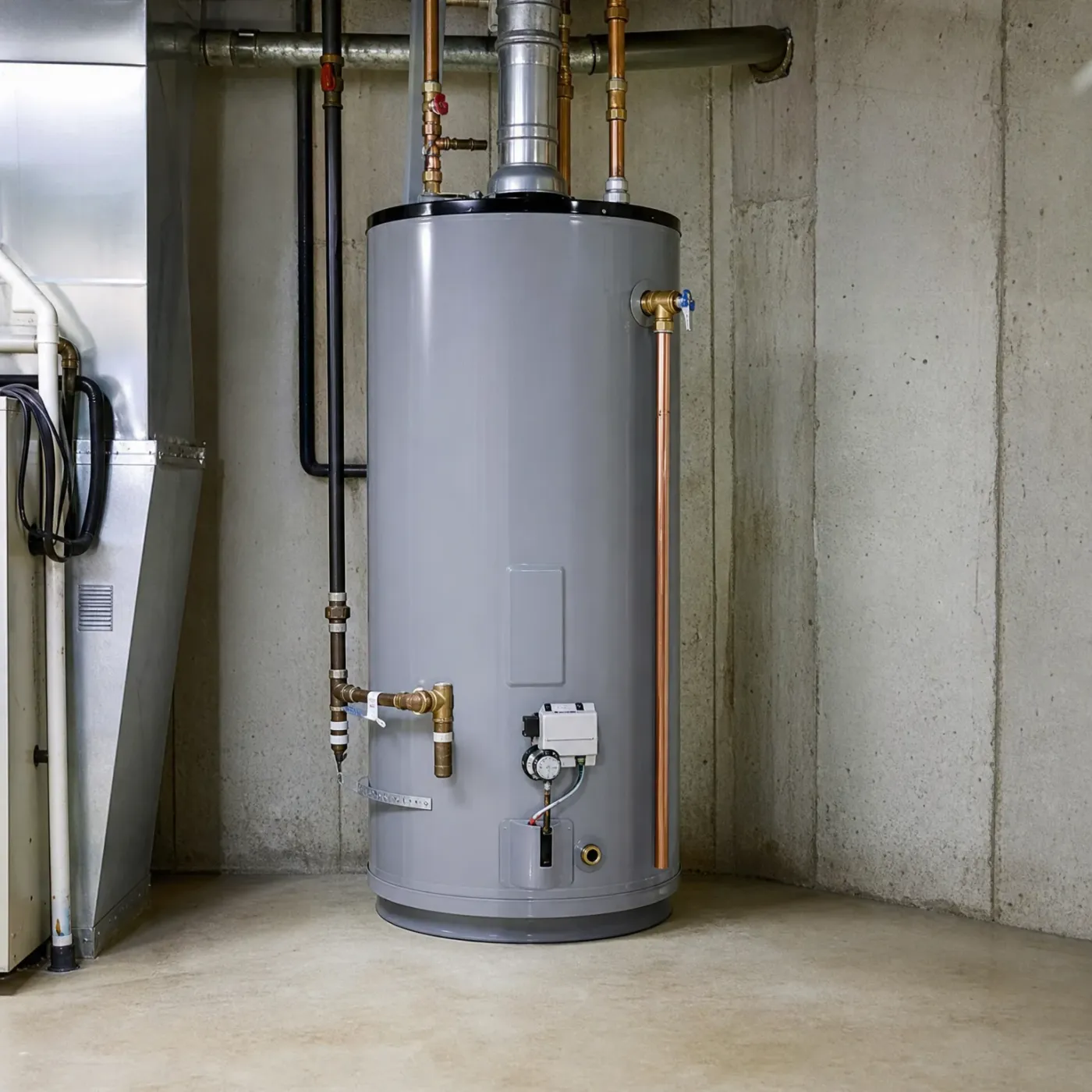
A large gray cylindrical gas water heater stands in a concrete-walled basement corner, connected to copper and black pipes and a metal flue, with ductwork at left.

Working the way it should

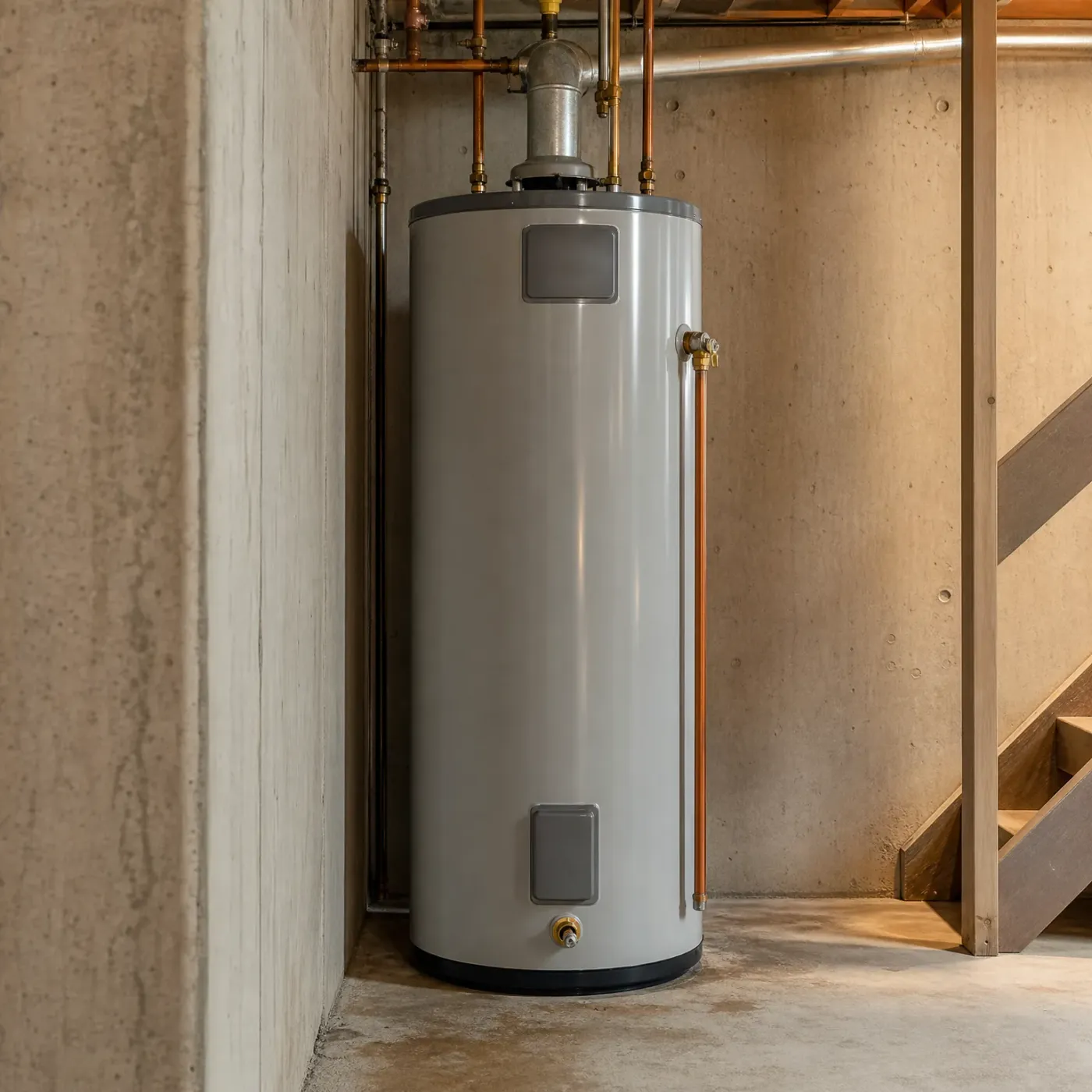
A water heater tank holds hot water that moves out through copper and into the lines without any smell at all. The anode rod inside is doing its job quietly, drawing corrosion away from the steel tank so it doesn't rust through. Gas, vent, and controls all doing their part.

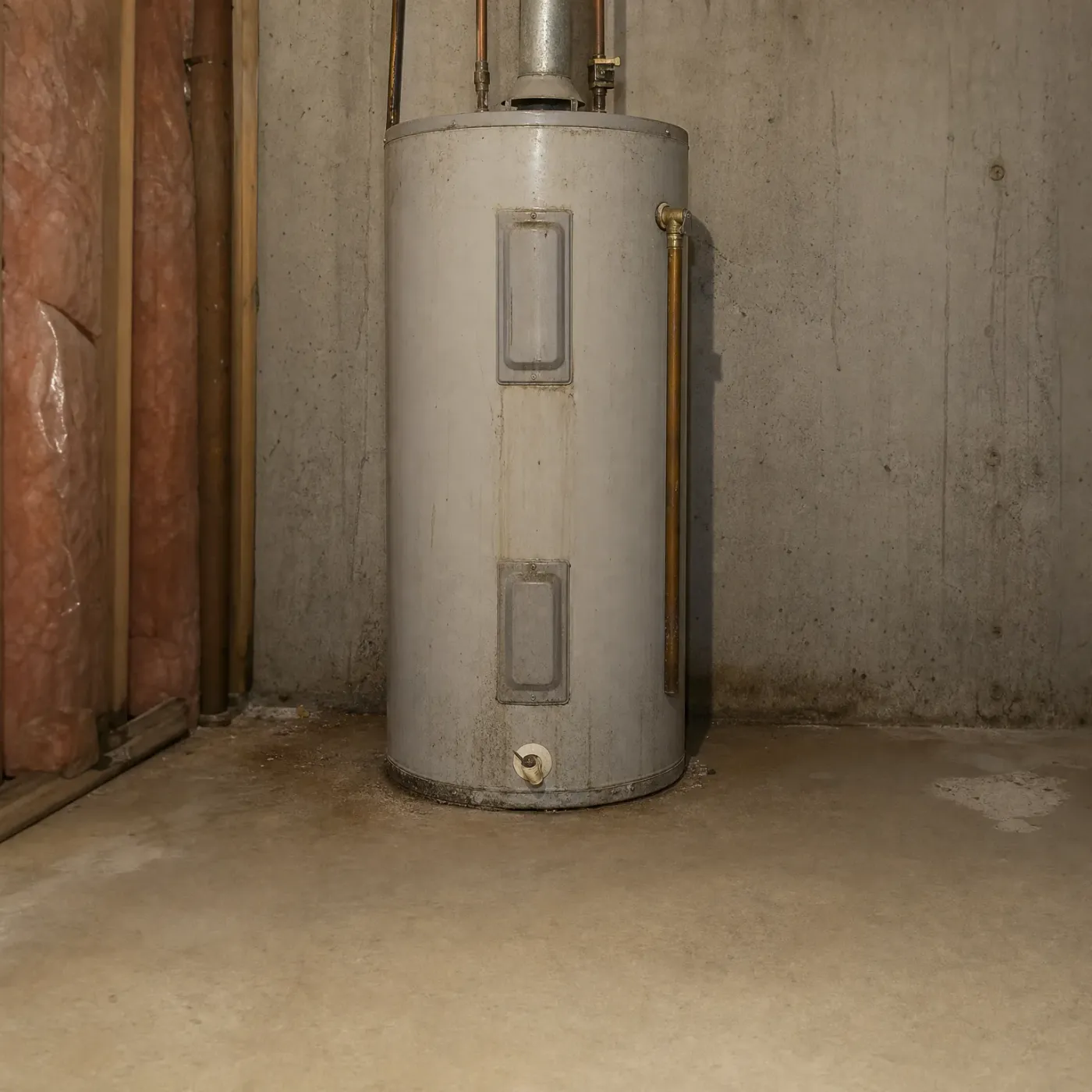
A gray cylindrical water heater with two access panels and copper piping stands in the corner of a concrete-walled basement next to exposed pink insulation.

When the rod turns against you

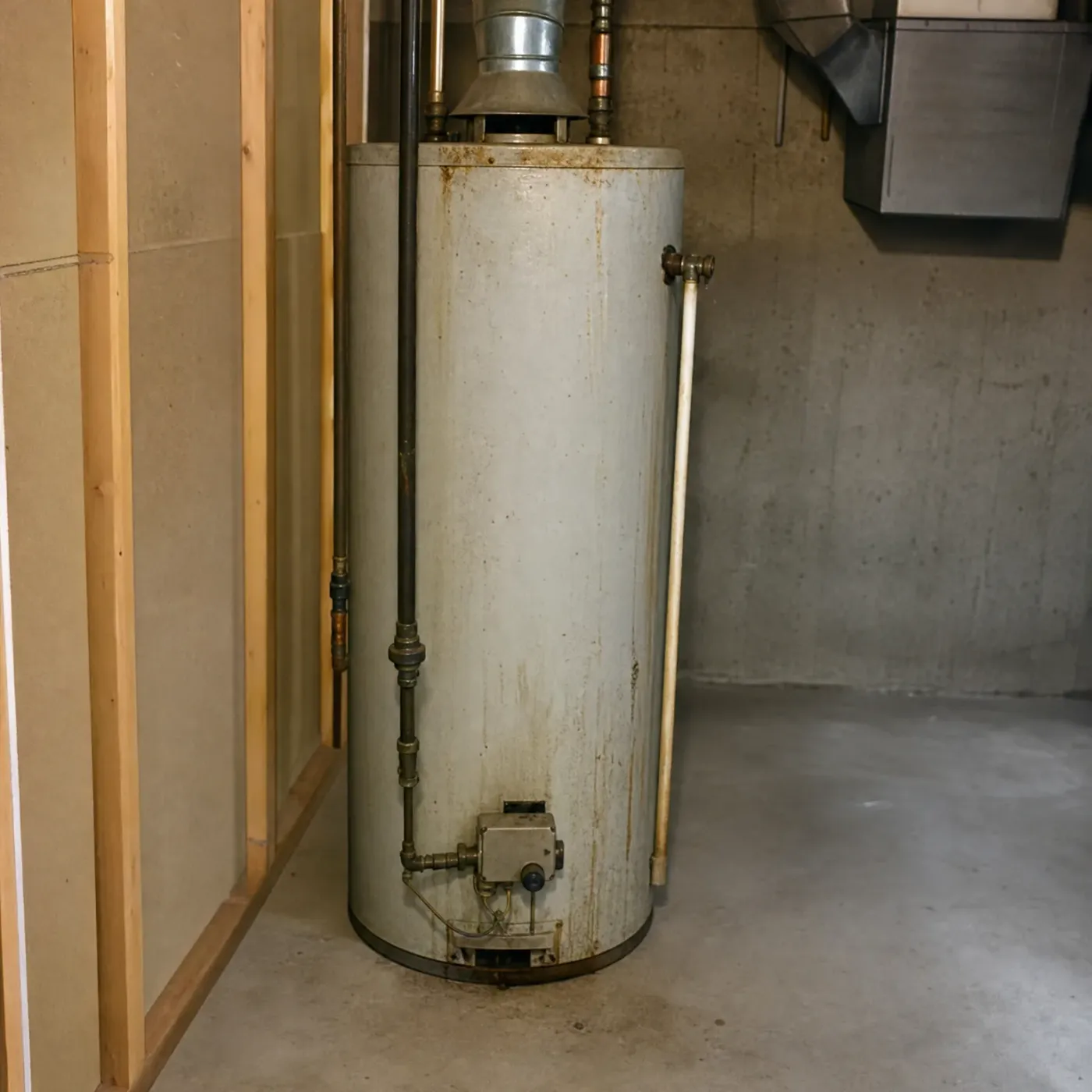
Rust staining on the tank and a worn drain valve often mean the anode rod is spent or reacting badly with the water. Once that rod stops protecting the tank, sulfur bacteria can multiply undisturbed, and that's when the smell shows up in your hot water.

Flush the Tank or Replace the Rod

Flush the tank

  • A contractor can drain the tank and flush out the sediment where the bacteria live, which often clears the smell without replacing anything.
  • This works best when the rod and the tank itself are still in decent shape and the smell showed up recently.
  • It costs less than swapping the rod, since it's mostly labor and time, not parts.
  • The smell can come back in a few months if the bacteria were never fully cleared or the water keeps feeding them.
  • Well water in Idaho can reintroduce the sulfur bacteria even after a flush, so this isn't always a one-time fix.

Replace the anode rod

  • Swapping the magnesium rod for an aluminum or zinc one removes what the bacteria are feeding on in the first place.
  • This is the fix a contractor will usually recommend if the smell keeps returning after a flush.
  • It costs more upfront than a flush, since it's a part plus labor to get it out of the tank.
  • A stuck or corroded rod can be hard to remove on an older tank, which adds time to the job.
  • Once it's changed, most homes don't see the smell come back unless something else is feeding the bacteria.
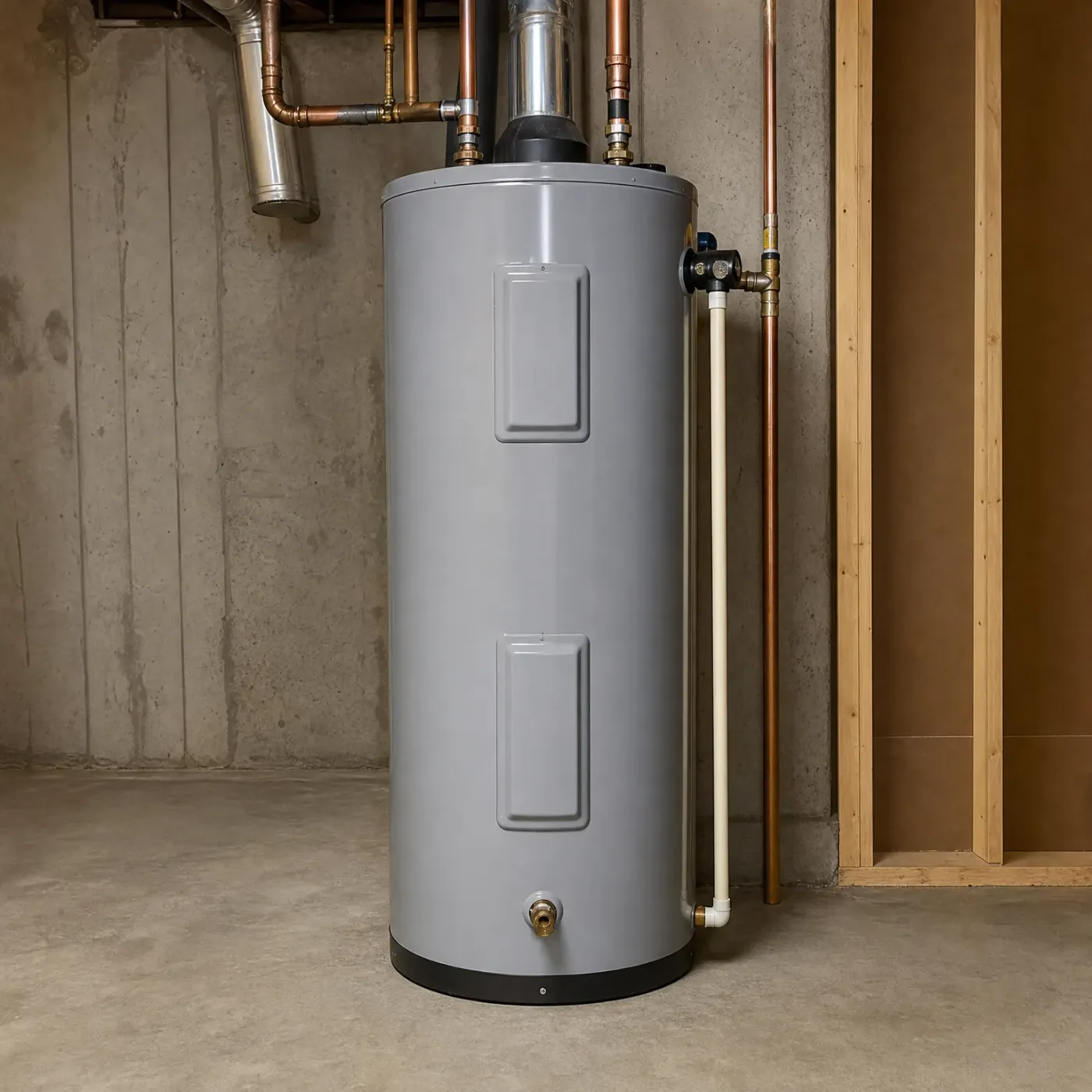
A gray cylindrical water heater stands against a concrete basement wall, connected to copper pipes and a metal flue overhead, with a white discharge pipe running down its right side and exposed wood framing to the right.
The tank is sound, the flue draws, and the fittings stay dry, so the only odor coming off the hot tap is faint and fades fast.
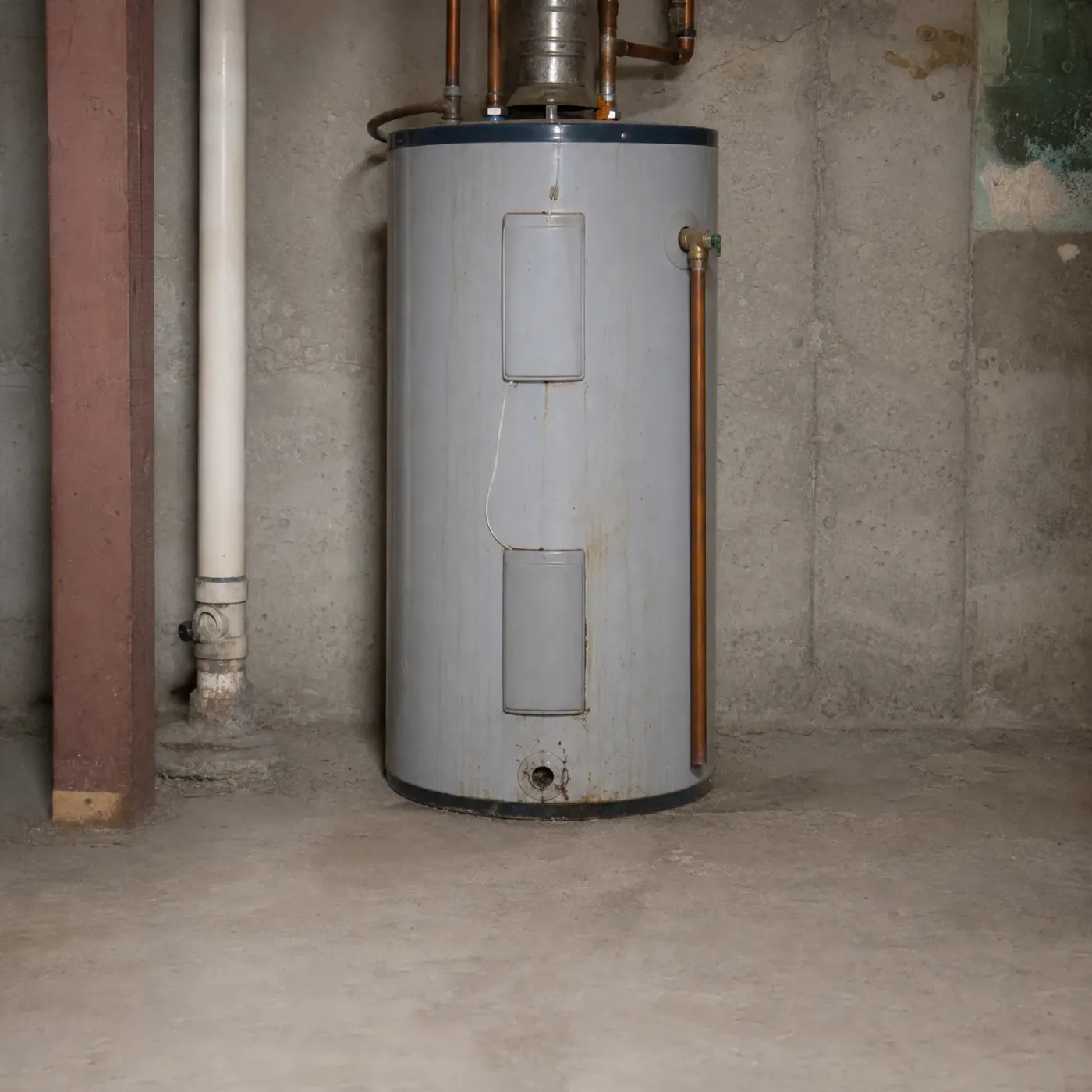
A gray cylindrical water heater with copper piping stands against a concrete basement wall beside a white vertical pipe and a wooden post.
Rust around the base and aging fittings like this often mean the anode rod is spent, which is what lets the smell take hold.
  1. Sulfate-reducing bacteria settle into sediment at the tank's bottom.

  2. Bacteria feed on the magnesium anode rod and multiply.

  3. The reaction produces hydrogen sulfide gas inside the tank.

  4. Gas stays trapped in standing water between uses.

An old rusting gas water heater with flue pipe and connected plumbing stands on a concrete floor in a basement corner beside an unfinished wood-framed wall and a metal duct.
Before you get your water heater repair
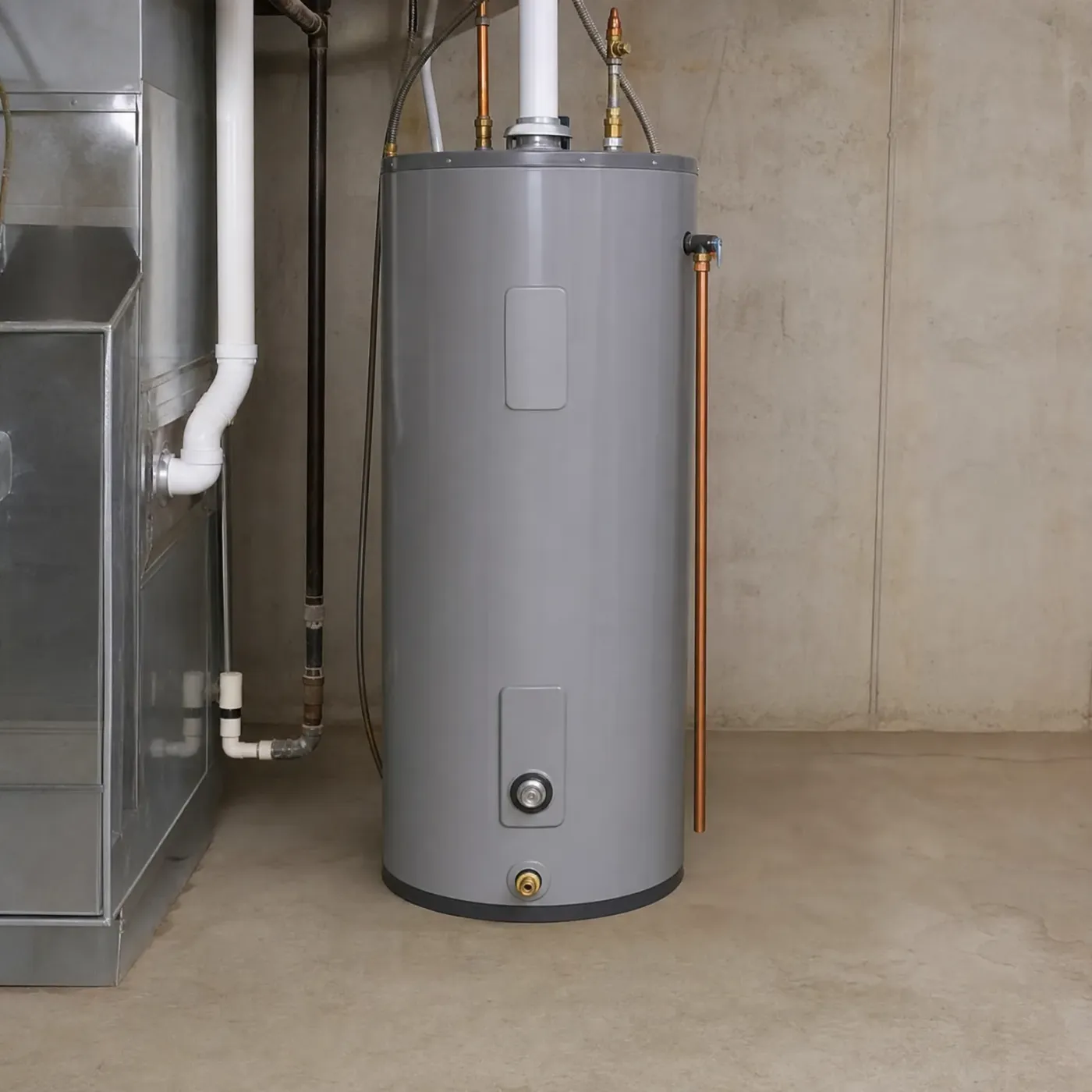
A gray cylindrical water heater stands on a concrete floor against a concrete wall, with copper and white pipes above it and a metal ductwork unit to the left.
After you get your water heater repair

Hand off the search today

You've read enough by now to know this isn't going away on its own. Whether it's the sediment feeding the bacteria or an anode rod that's given out, someone has to get a wrench on that tank to fix it, and that's not a weekend job you want to guess your way through with gas and water lines involved. A local contractor who works on water heaters all year in Idaho has seen this exact smell more times than he can count, in homes on the same well and municipal water you're on, and knows within a few minutes whether it's a flush or a rod swap. Send the request and that search becomes his problem, not yours. You stop smelling rotten eggs every time you run a shower, and you stop wondering if it's safe to use the hot water at all.

Why a new rod can smell worse

Magnesium rods react faster than aluminum ones, which is why magnesium throws off more hydrogen sulfide gas when the bacteria get to it. If a water heater is fairly new and already smells, it likely came with a magnesium rod from the factory. A contractor can swap it for an aluminum-zinc rod, which still protects the tank from rust but doesn't feed the bacteria the same way. The tank itself doesn't need to be old for this to happen. It comes down to which metal is hanging inside it and what the water in your area has to work with.

Why it shows up more in summer

Water sits longer in the tank between uses once the weather turns hot and dry, and a tank that isn't cycling as often gives the bacteria more time to work on the rod undisturbed. Groundwater levels and well water composition in Idaho can shift with the season too, which changes how much sulfate is available for the reaction. That's why some homeowners notice the smell fade over the winter and come back by July. It isn't a sign the problem fixed itself. The bacteria are still in the tank, just working at a different pace.

51.6% of homes statewide heat with gas

Most homes in Idaho run on gas for water heating, and that's likely what's sitting in your utility closet or garage. The fuel source doesn't cause the smell, but it does mean a contractor working on your tank has a gas line and a flue to check alongside the rod and the sediment.

ACS 2020-2024 5-year B25040

A woman with shoulder-length brown hair wearing a beige knit cardigan sits in a gray upholstered armchair near a window, looking off to the side with a slight smile, with bookshelves blurred in the background.
A woman and a child wrapped together in a knitted gray blanket on a couch, with the child's head resting on her shoulder and a lit table lamp and houseplant in the background.

The smell has a known fix

  • The smell comes from bacteria feeding on your anode rod, not from anything dangerous in your plumbing.
  • Flushing the tank clears it when the rod still has life left and the sediment hasn't built up long.
  • Swapping the magnesium rod for aluminum or powered zinc stops the reaction for good when the rod is the real problem.
  • A contractor working water heaters in Idaho all year knows which of these two fixes your tank actually needs.
  • One licensed local contractor takes the call, so you're not sorting through a pile of quotes to find the right one.
  • Once you know the cause, the fix is a known job, not a guess.

Rotten egg smell in your hot water means bacteria working on the anode rod inside your tank, and that's a water heater problem, not a sign anything in your house is unsafe to drink. A contractor who's been inside enough Idaho tanks can tell within a few minutes which side of the job you're on. If the rod still has some life in it and the sediment's only been building a short while, a flush usually settles it. If the rod's worn down or it's been feeding the bacteria for a while, flushing won't hold, and the rod needs to come out and get replaced with aluminum or powered zinc so the reaction stops instead of coming back in a few months. Either way, it's a job with a known shape to it once someone's had a look at the tank, not a guess.

That's the kind of call that goes to one contractor, not a handful. Someone licensed, working in your area, who sees this same smell come up in tanks all year and knows which of the two it usually is before they've even opened the access panel. You're not fielding calls from three different companies trying to figure out who to trust with it. You're getting matched to the one who already knows what a tank like yours tends to need, and that's who shows up to sort out your water heater for good.


A tall gray cylindrical water heater stands in a concrete basement corner with copper pipes and a metal flue above it and a wooden staircase at right.

Stop chasing a water heater pro

Send my request

Your request goes to one pro, not a list of companies.

It costs nothing to send, and you don't have to hire anyone.