Working the way it should
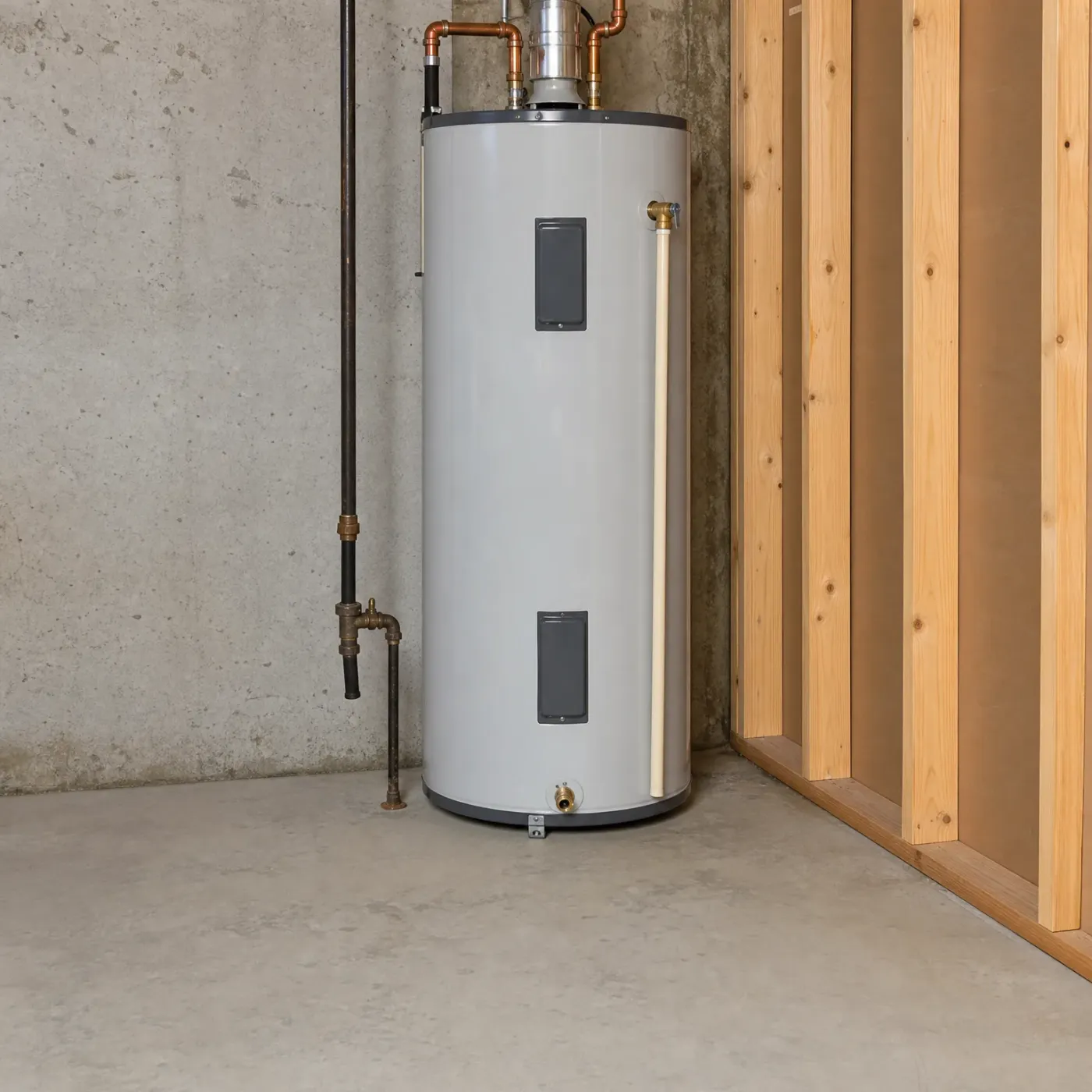
This tank is dry at every joint, the fittings are tight, and no rust climbs the steel from the base. Copper lines run clean to the tank. A water heater in this shape has no reason to leak.
 Request a pro
Tell a local repair pro what your water heater is doing.
Water pooling at the base of your water heater, or dripping from a fitting, is not something that waits. In most Idaho homes the water heater sits on a garage floor or in a closet near living space, and a slow leak today is a wet floor or a damaged wall tomorrow.
Gas water heaters, which is what most houses here run, can leak from a few different places. The tank itself can rust through at the bottom and start weeping. A fitting on top can loosen. The temperature and pressure relief valve can fail and let water out as a safety measure. The drain valve near the bottom can crack or just not seal anymore. Each of these looks about the same from across the garage: water where it shouldn't be. But they call for different fixes, and some of them mean the tank is done while others are a quick repair.
That's the part you can't tell just by looking. A loose fitting might be a five-minute tighten. A corroded tank means replacement, not repair. Figuring out which one you have takes someone who's looked at enough of these to know what a particular pattern of water usually means.
You don't have to figure that out yourself. Once you put in a request here, the work of finding someone who handles water heater repair in your area is off your plate. A contractor who takes on jobs like yours gets your information and follows up with you directly.
With water already loose near a gas appliance and its connections, this isn't something to sit on while you wait to feel ready to deal with it. Turning off the water supply to the tank can buy you time, but the leak itself needs a pair of eyes on it. That's what the next step is for.
A leaking water heater usually means a tank that has rusted through from the inside, a loose or failing fitting, or a valve that is letting go. Most Idaho homes run on gas, and gas water heaters leak from the tank itself once the glass lining inside cracks and the steel underneath starts to corrode. That kind of leak only gets worse, since a rusted tank cannot be sealed or patched. Water dripping from a pipe connection or the drain valve is a different problem and often just needs tightening or a part replaced. The pressure relief valve on top can also release water if pressure inside the tank builds too high, which is normal when it happens occasionally but a sign of trouble if it keeps happening. Knowing which one you are dealing with determines whether this is a quick fix or a sign your water heater is done.
Inside every tank water heater is a layer of glass lining coating the steel, there to keep the water from touching bare metal. Gas or electric, that lining is what keeps the tank from rusting through in the first place. Once it cracks, usually from age or from mineral buildup wearing at one spot, water gets to the steel underneath and starts eating through it. That is why most tank failures happen with no warning fitting leak to explain them. The rust doesn't start evenly. It usually starts at a weld seam or around a fitting where the lining was thinnest to begin with, then works its way down the tank toward the base over time. That is also why a puddle at the base, with nothing visibly dripping above it, almost always means the tank itself is the problem rather than a part attached to it. Not every leak means a new tank. The drain valve near the bottom is a simple part that wears out or loosens with use, and it is one of the cheaper things on a water heater to replace. A fitting where a pipe connects can work loose over years of heating and cooling and drip steadily from that one point. The relief valve on top or on the side is built to open when pressure inside climbs too high, and if it is letting go, that is the valve doing its job, not failing at it. Where the water is coming from tells you which of these you are dealing with.


A leak from the tank itself does not stop and does not get patched. Once rust has worked through the steel, the only fix is a new water heater, and the leak will keep finding new spots to come through while you wait. A leak from a fitting or valve is different. That can often be tightened or the part replaced, and the tank goes on running. Telling the two apart from a wet floor in a garage is hard, and guessing wrong costs you water damage to drywall, flooring, or whatever is stored nearby. A contractor can look at where the water is coming from and tell you which one you have. If it is a fitting, you may be back to normal gas water heater service within the day. If it is the tank, you will know that now instead of after another gallon has spread across the floor. Either way, the next step is getting someone out to look at it.
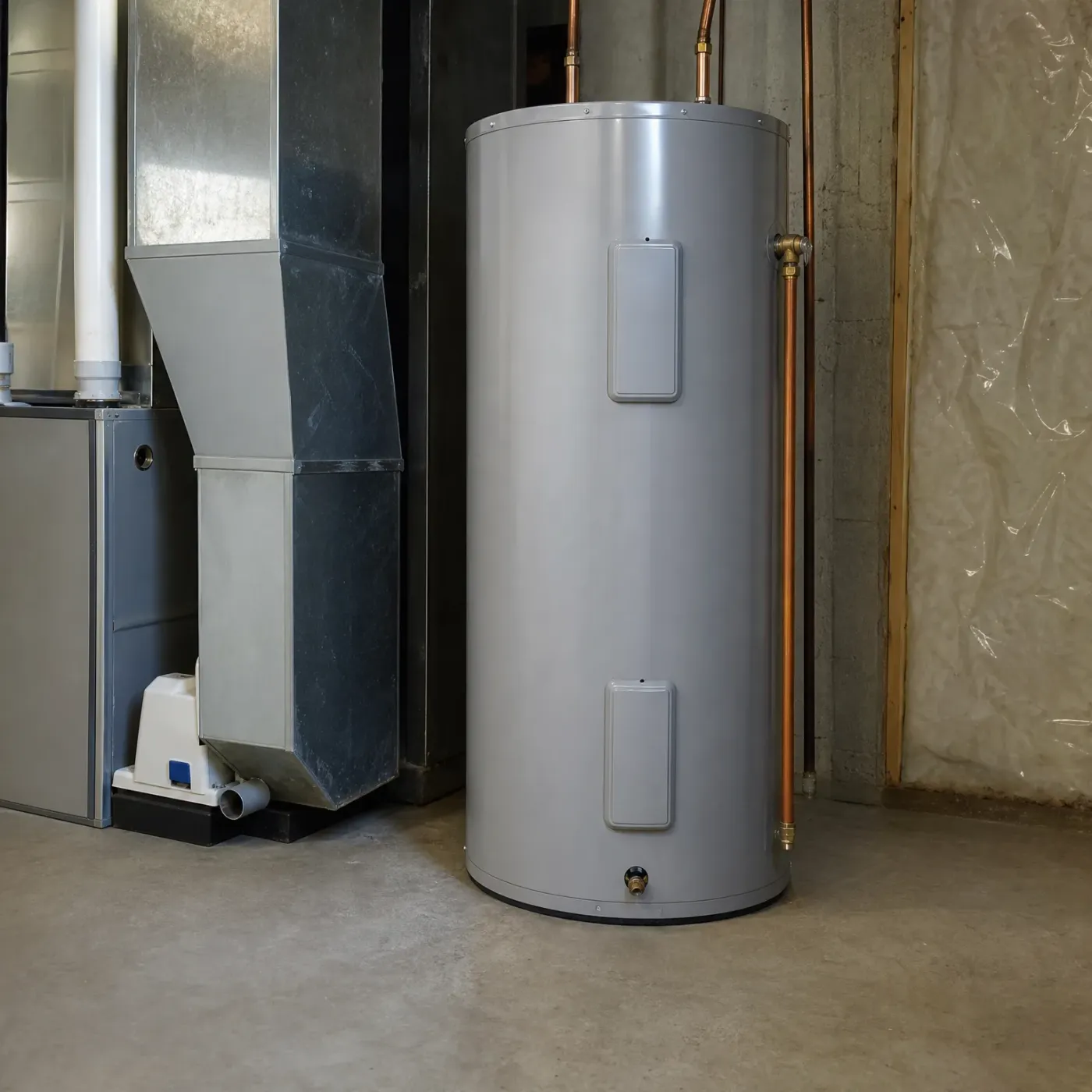
This tank is dry at every joint, the fittings are tight, and no rust climbs the steel from the base. Copper lines run clean to the tank. A water heater in this shape has no reason to leak.
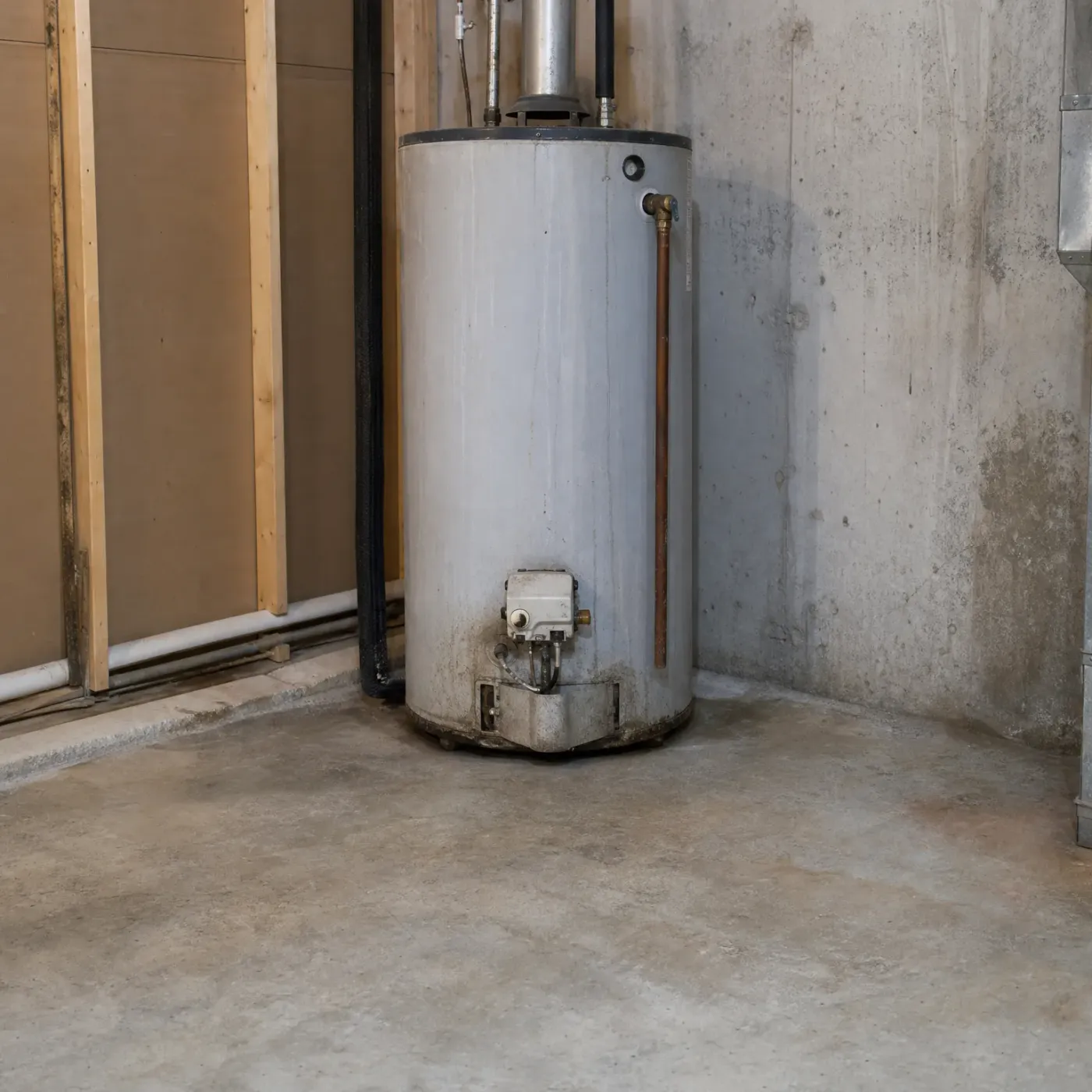
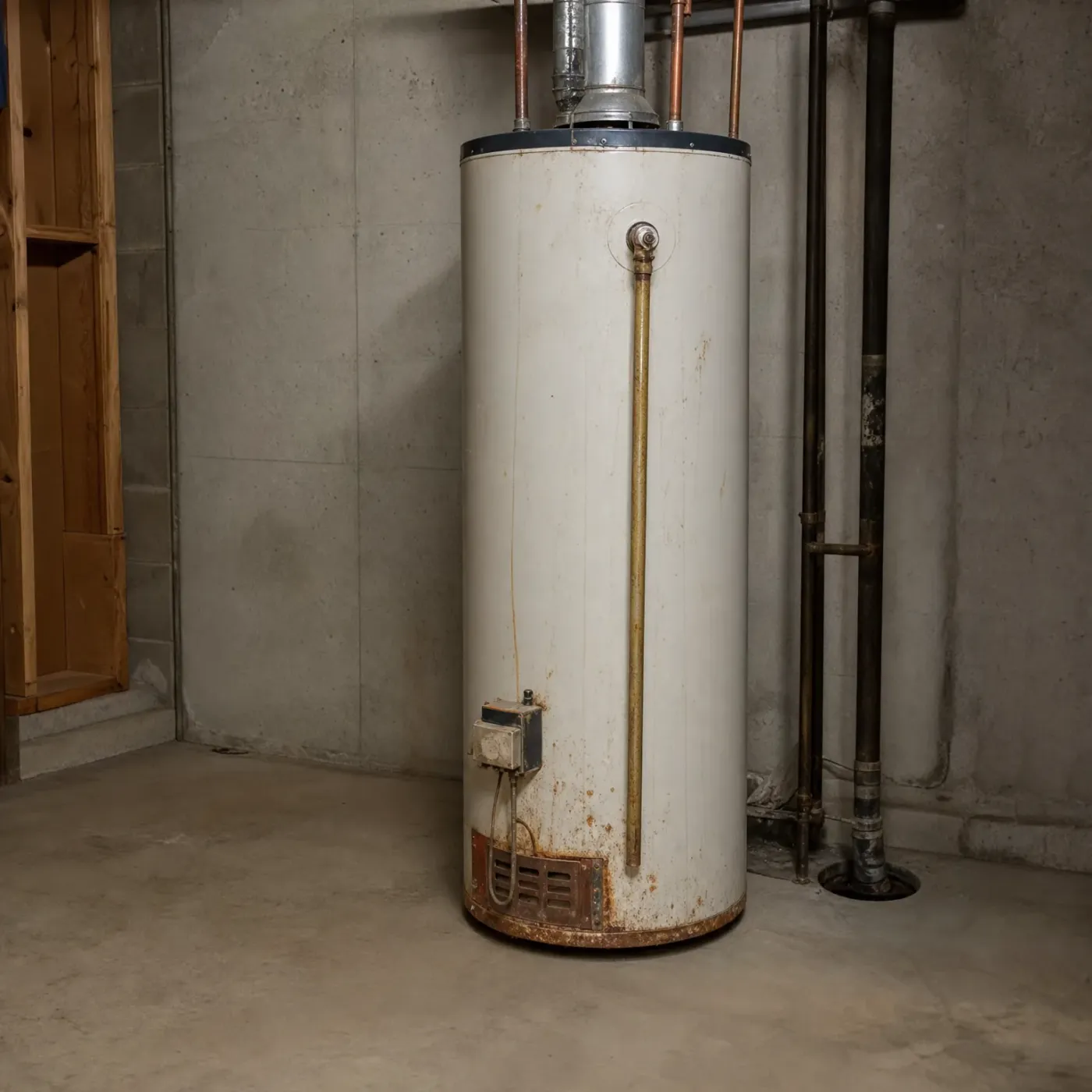
Rust and grime have built up around the base and burner of this gas tank, with the copper line and flue still attached above it. Once rust reaches this point low on the tank, the steel underneath is failing, and the leak will not stop on its own.




Over half the homes in Idaho run their water heater off gas, and yours is likely one of them. The tank still rusts through from the inside the same way an electric one does, so a gas pilot burning nearby doesn't change what's causing the leak at the base.
ACS 2020-2024 5-year B25040
Water pressure forces moisture into any weak point in the tank
A crack in the glass lining exposes bare steel underneath
Rust spreads from that spot through the surrounding metal
The weakened steel finally gives way and water escapes

Water at the base, rust climbing the steel, a fitting that won't stay dry. Whatever shape it's taking, it points to one of two things: a tank that's rusted through, or a fitting or valve that still has a fix. The leak itself tells you which, and now you know what to look for.
You don't have to figure out the rest on your own. Send in what you've found and a contractor who works on water heaters across Idaho will reach out to look at your specific situation. That's one less thing sitting on your shoulders while you keep the house running for everyone in it.


Get the right pro for your water heater