Tell us about the job
Takes about a minute. No obligation.
Gas lines, venting, and combustion air all have to be sized together, and a contractor has to verify each of those before recommending a unit. Utility gas heats more occupied homes in Madison County, Idaho than any other fuel, at 54.3% (2020-2024 ACS 5-year). That share means the overwhelming majority of water heater installs here involve gas appliances, so a contractor arrives expecting to assess flue type, draft conditions, and whether the existing gas supply line can carry the new heater's demand. A unit that clears every other specification still fails inspection if the venting run does not match what the new appliance requires.
The ductwork question does not apply to a water heater, but the electrical one does. Half the homes in Madison County, Idaho were built in 2002 or earlier (2020-2024 ACS 5-year). A house built around that period was wired for the load its original equipment drew, and a new water heater, particularly an electric heat pump model, can draw more than what that service was sized to carry. A contractor will open the panel and read what is actually there before the quote reflects the full job. Some panels clear it without any work; others do not, and the difference changes the scope and the bill.
What a Water Heater Installation Puts in Your Home
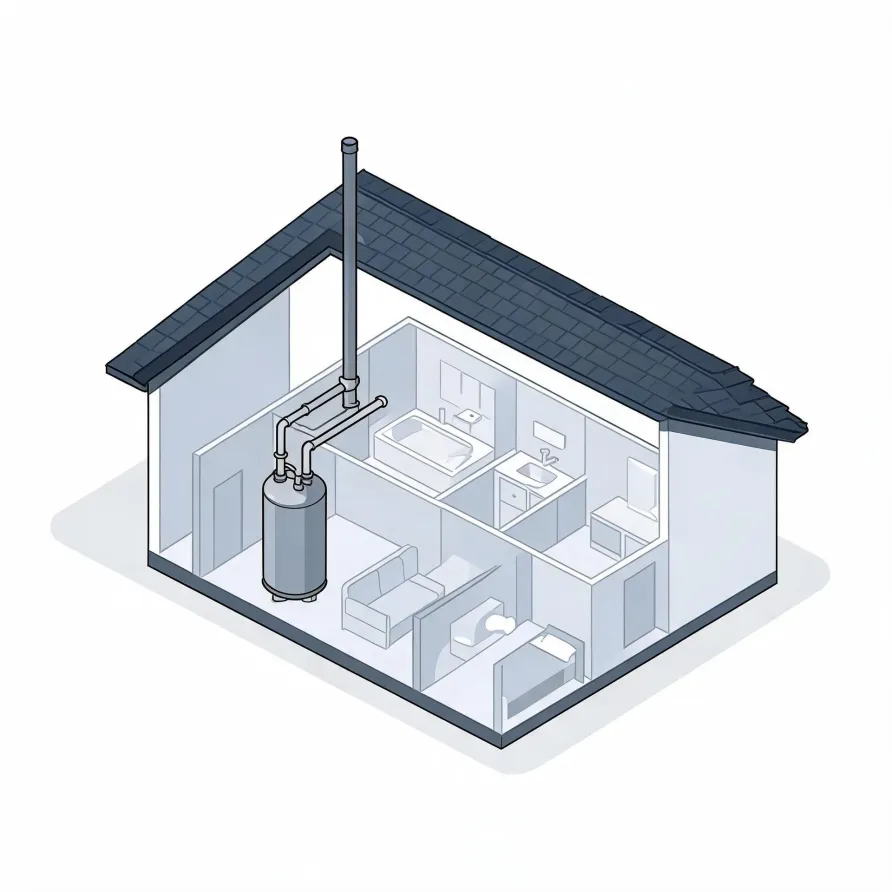
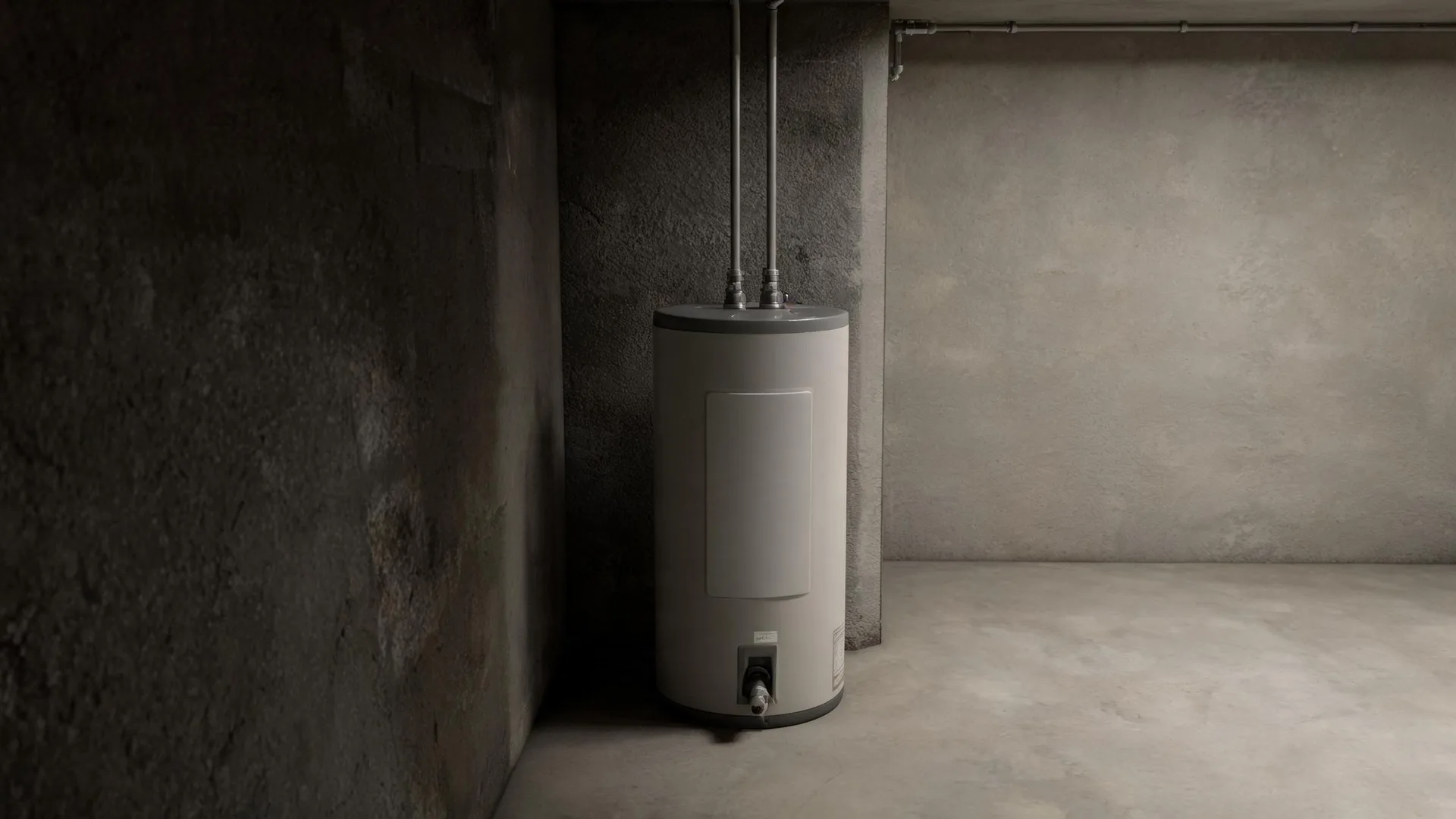
The tank is the piece a homeowner sees first. It sits in a utility closet, basement, or garage and holds a supply of water that a contractor heats to a set temperature. A pressure relief valve mounts directly on the tank and releases if pressure inside climbs too high.
A cold water inlet line feeds the tank from the home's supply, and a hot water outlet line carries heated water out to every fixture in the house. A drain valve sits near the base of the tank, and the flue or vent pipe runs from the top of the unit up and out of the home to carry combustion gases away.
The drawing shows a general layout of these components, and a licensed contractor determines exactly what applies to your home and its existing setup.
Find a contractor in Madison CountyMadison County by the Numbers
168 severe weather events were recorded in Madison County, Idaho between 2015 and 2024.
NOAA National Centers for Environmental Information, Storm Events Database, bulk CSV export, events 2015-01-01 through 2024-12-31.Half the homes in Madison County, Idaho were built in 2002 or earlier (2020-2024 ACS 5-year).
U.S. Census Bureau, 2020-2024 American Community Survey 5-Year EstimatesMadison County, Idaho holds 15,145 housing units (2020-2024 ACS 5-year).
U.S. Census Bureau, 2020-2024 American Community Survey 5-Year EstimatesOwners occupy 40.2% of the occupied homes in Madison County, Idaho (2020-2024 ACS 5-year).
U.S. Census Bureau, 2020-2024 American Community Survey 5-Year EstimatesSevere Weather Events in Madison County
Water heaters work harder when outdoor conditions swing hard, and the load a unit carries over its life is shaped by local weather as much as by the equipment itself. What happens in Madison County is not what happens elsewhere, and the right installation accounts for that.
168 severe weather events, 2015–2024. Source: NOAA National Centers for Environmental Information, Storm Events Database.